

Bad Decisions Don’t Automatically Make Self-Defense Unlawful
We have a habit of looking at defensive shootings and trying to figure out who was the good guy and who was the bad guy. Sometimes that’s easy.
Other times, two bad people get into a fight. Or two genuinely good people get into a fight. More often, we’re dealing with two imperfect human beings who made a series of decisions, some reasonable and some not.
But we still want to assign the roles of hero and villain. I’ve seen that instinct play out in conversations about defensive gun uses for years. People hear a few details, decide who they like, and then interpret everything else through that conclusion.
There’s a problem with that approach.
The law doesn’t require you to be a good person to have the right to defend yourself. And being a good person doesn’t automatically make your use of deadly force lawful.
Those are two very different questions.
The Problem With Good Guys and Bad Guys
This is the third article in my series examining lessons from the George Zimmerman murder trial, which I recently watched in its entirety. In the introduction to this series, I explained why I spent nearly 88 hours watching a trial from 2013.
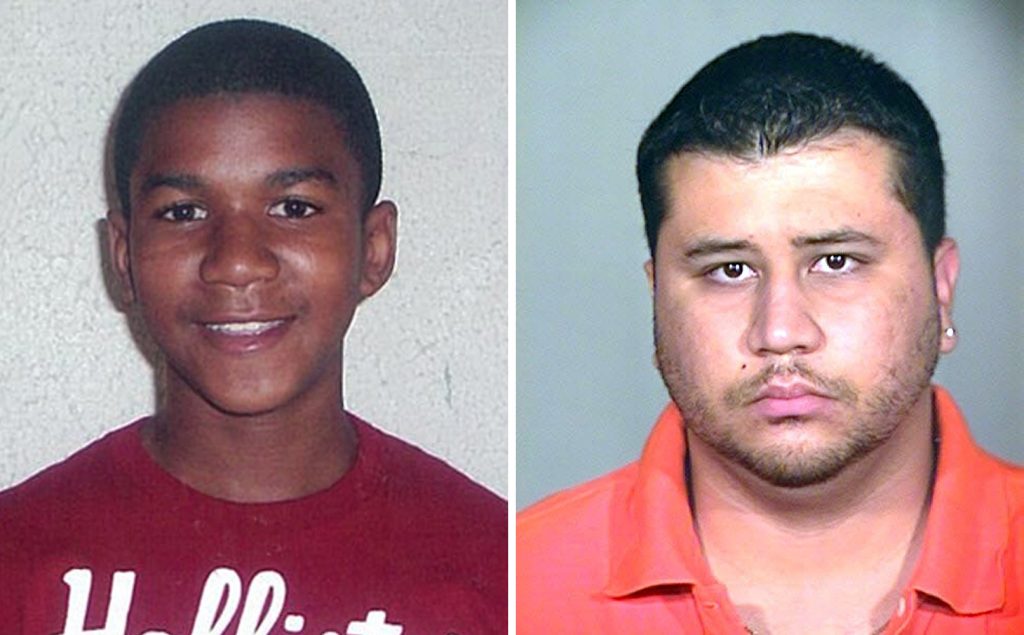
One of the things that struck me was how much of the public discussion about the case depended on how people viewed George Zimmerman and Trayvon Martin as individuals.
The prosecution and the media emphasized that Martin was “just” a teenager who had gone to a convenience store to get some candy and was walking back through the neighborhood. They presented Zimmerman as someone who had racially profiled Martin as a criminal and made decisions that contributed to the confrontation.
The defense presented Zimmerman as a neighborhood resident concerned about crime who ultimately found himself being physically assaulted.
Those competing narratives mattered to how people understood the case including the jury but that is what I want to challenge. The fact that Martin was walking home from a convenience store doesn’t establish what he did during the subsequent confrontation.
And the fact that Zimmerman was concerned about crime in his neighborhood doesn’t establish that his actions during that confrontation were lawful. Both statements can be true without resolving the legal question.
We can examine someone’s personal history, associations, attitudes, and prior behavior until we’re blue in the face. We might develop strong opinions about what kind of person they were. But that doesn’t necessarily tell us who initiated a physical confrontation or whether the eventual use of deadly force was justified.
I’m not suggesting none of that matters. Knowing George was frustrated with crime in his neighborhood might speak to his state of mind but it can also paint a picture that confuses the legal question the same way that knowing the Martin was staying with his dad because he had been suspended from school 3 times in 3 months might tell you something about him but it doesn’t impact the legal question of self-defense.
Character is not a substitute for evidence of conduct.
Neither Man Had to Be Perfect
I think it’s entirely reasonable to question some of the decisions Zimmerman made that night. He saw Martin and concluded that he was suspicious. He contacted police and proactively left his vehicle in an effort to best answer the questions from the dispatcher.
He found himself outside in the dark, in an unfamiliar and potentially dangerous situation, and discovered his primary flashlight wasn’t working. We can discuss whether he should have remained in his vehicle, whether he should have approached the situation differently, or whether he could have avoided the encounter entirely.
Those are legitimate questions. But they aren’t necessarily the questions that determine whether a subsequent use of deadly force was lawful. Likewise, we can discuss Martin’s behavior before the encounter. If he was high, why he didn’t go home, why he initially ran, his personal history, or whether he had any reason to be suspicious of Zimmerman.
None of those considerations automatically establishes what happened during the physical confrontation or necessarily impact the question of lawful self-defense. I don’t need to believe Zimmerman made every decision correctly to conclude that he may have been legally justified in defending himself.
And I don’t need to believe Martin was a bad person to consider the possibility that he initiated the physical violence. Though in this case in order to believe George’s account you do need to accept that this 17 yr old boy is willing to confront and attack someone for doing nothing more than follow him and in order to believe that it may help to know his background (which the family hid from the public and the court kept out of evidence).
George said that Trayvon effectively ambushed him and punched him in the face. There was no evidence to the contrary. That matters in the legal question.

Depicts Trayvon punching George in an animation Defense used in their closing argument.
So yeah, there was some drama but my point is we don’t need to know any of that to answer the legal question of self-defense. We have to stop trying to force every self-defense case into a story about a hero and a villain.
What the Law Actually Cares About
Self-defense laws in this country, and certainly in 2012 Florida, permitted deadly force when a person reasonably believed it was necessary to prevent imminent death or great bodily harm.
The media and law enforcement went to extreme lengths to misunderstand and spread misinformation about the Florida “Stand Your Ground” law which in all actuality does nothing more than remove any requirement of having to retreat from a threat even if you safely could. Given that you can’t retreat from a threat that is straddled on top of you punching you in the face; the Zimmerman event had absolutely nothing to do with Stand Your Ground. It was in all respects NOT a stand your ground case despite the misrepresentation of that law by the media. In case you are wondering, about 3/4 of states in this country effectively have “stand your ground” laws.
Sorry, a little off topic there.
The point is that there isn’t a requirement that the person defending himself be morally admirable. It isn’t a requirement that he had made every previous decision correctly. And it isn’t a requirement that he wait until he has already suffered a life-threatening injury.
The central questions involved what the defender reasonably believed, whether the danger was imminent, and whether deadly force was legally justified under the circumstances. The jury in Zimmerman’s trial was instructed to consider the circumstances surrounding him when he used force.
Importantly, the danger didn’t have to turn out to be exactly what the defender believed it was. The appearance of danger had to be sufficiently serious that a reasonably cautious and prudent person in the same circumstances would have believed deadly force was necessary.
And the defender had to genuinely believe the danger was real. That distinction matters enormously. Self-defense law isn’t based entirely on hindsight. You are not held to a perfect knowledge of the facts. Only what you can reasonably perceive in the moment.
You Don’t Have to Know What the Attacker Intended
Picture someone on his back, taking punches, who believes the guy on top of him is going for his gun.
Maybe he is. Maybe he’s reaching to keep his balance or to wind up another punch. The defender has no way to know, and the law doesn’t expect him to read minds in the middle of a beating. It asks whether his belief was genuine and whether a reasonable person in his position would have shared it. That reasonable person standard sits at the center of when you can legally shoot someone, and it’s worth understanding cold before you ever carry.
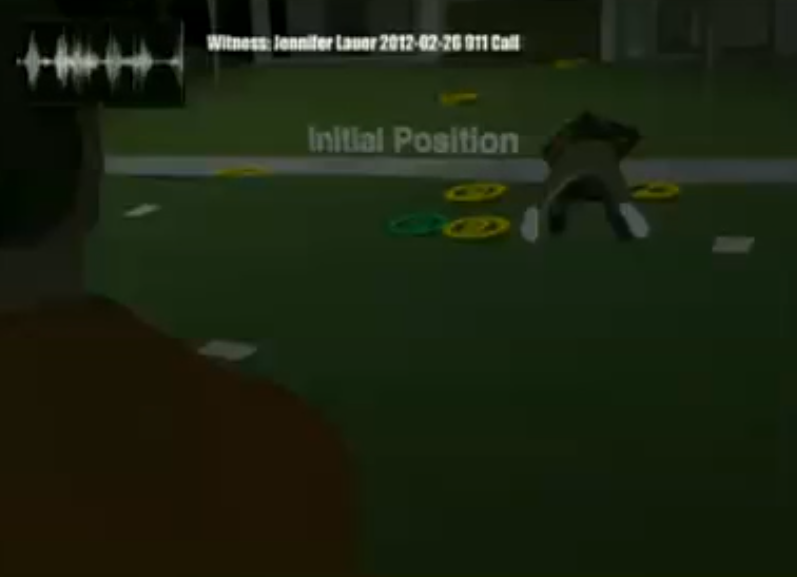
Also from the animation depicting Martin Straddling Zimmerman in the moments before the gunshot
That’s the account Zimmerman gave investigators. He said Martin was on top of him, striking him and driving his head into the concrete, and that Martin reached for the pistol on his hip. His injuries, eyewitness testimony, and the forensic evidence supported large parts of that story and certainly there was no viable evidence to contradict it.
There was an argument, with DNA to back it up, that Martin never actually touched Zimmerman’s gun but that didn’t matter. Because the legal question was never whether Martin actually intended to take the gun. Once self-defense was in play, the state would have had to prove beyond a reasonable doubt that Zimmerman had no good reason to THINK Martin was reaching for his gun, among other things.
That verdict isn’t the jury certifying every word of Zimmerman’s story. It means the prosecution couldn’t carry its burden.
But Didn’t He Start It by Getting Out of the Car?
Somebody always says it. None of this happens if Zimmerman just stays in his truck.
That’s probably true. It’s also not a legal argument. Almost every violent encounter can be traced back to some decision that would have prevented it in hindsight: the wrong gas station, the wrong shortcut, answering a stranger’s question. If that were enough to forfeit self-defense, we could blame nearly any victim for nearly any crime.
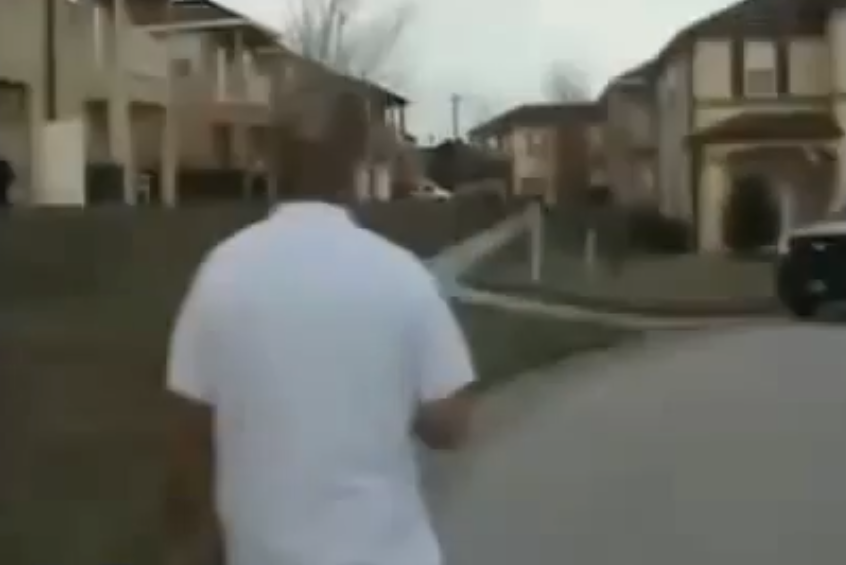
Zimmerman showing officers where he got out of his truck
The law draws the line somewhere much more specific. Florida, like most states, limits self-defense for someone who initially provokes the use of force against himself. A provoker only gets that right back by clearly withdrawing from the fight, or by facing deadly force after exhausting every reasonable means of escape.
And this is the part of the trial most people never heard about. The prosecution asked Judge Nelson to give the jury that initial aggressor instruction, arguing that following Martin was itself the provocation. The judge declined. Florida courts had held that provocation means force or the threat of force, and there was no evidence Zimmerman did either before the fight started and frankly we could debate over the idea that he “followed” Trayvon at all.
So earlier conduct absolutely can matter. Threaten someone, put hands on them first, or deliberately pick a fight, and you may lose the very protection you’re counting on. Getting out of a vehicle, walking down a sidewalk, or trying to read a street sign isn’t that.
The question isn’t whether you made a bad decision. It’s whether you made the kind of decision that changes your legal right to use force.
Legal Isn’t the Same as Smart
Now the flip side, because I don’t want anyone walking away with the wrong lesson. “I’d probably win in court” is a terrible standard for how to live your life.
If I can stay in my vehicle and let police handle a suspicious person, I’m staying in the vehicle. If I can walk away from an argument, I’m walking away. Not because the law demands it every time, but because I’d rather not shoot anyone, I’d rather not get shot, and I’d really rather not spend the next year (and a pile of money) explaining my choices to detectives, prosecutors, and 6 to 12 strangers.
And plan on this: most people don’t understand the law of self-defense. Your neighbors don’t, the reporters covering your case don’t, and odds are the people in your jury box don’t either. They’ll do exactly what I described at the top of this article. They’ll still spend their time trying to pick a good guy and a bad guy.
That’s why jury instructions matter so much. Before jurors deliberate, the judge explains the actual legal standard they have to apply, because almost nobody walks into that room already knowing it. Your conduct can meet every legal requirement and still lose in the court of public opinion, which never gets instructions and never has to deliberate.
George Zimmerman was acquitted. His life has never been the same. Winning is a lousy consolation prize compared to never being in that courtroom at all.
To be clear, for those who care, I think George might have made some decisions that were arguably less than ideal but I wouldn’t classify anything he did as a major blunder either. All the evidence supports that Martin snuck up on Zimmerman and punched him in the face and what we know about Martin is sufficient for me to accept he would do that.
What I Want You to Take From This
Self-defense law isn’t a referee deciding who the better person was. It asks a narrower question: at the moment force was used, was it reasonable and was it justified?
So the next time a defensive shooting hits the news, resist the urge to cast a hero and a villain before you know what either person actually did. And when it comes to your own choices, hold yourself to a higher standard than “legal.”
- Know your state’s rules on initial aggressors and provocation, not just the headline about duty to retreat.
- Treat “could I defend this in court?” as the floor, not the goal.
- Make the boring choices that keep you out of the fight in the first place.
If you want to know where those lines sit in your state before you ever need to, our American Gun Law course walks through them in plain English.
The best outcome isn’t winning a self-defense case. It’s never needing one.
