

Federal Judge Rules Biden-Era ‘Ghost Gun’ Restrictions Unconstitutional
Lately, I feel like its all I can do to keep up with sharing important court rulings that impact American gun owners. The gun grabbers of America keep handing us victories by infringing on our rights and forcing us to take them to court where… we win over and over and over again. Here is the latest:
A federal judge in Texas has handed gun owners a significant victory in the long-running fight over the Biden administration’s so-called “ghost gun” rule.
On August 17, Chief U.S. District Judge Reed O’Connor ruled that key portions of ATF’s 2022 frame-and-receiver rule violate both the Second Amendment and the Fifth Amendment’s Due Process Clause.
The ruling is important. But before you read too much farther, note that this one, like several other recent rulings applies somewhat narrowly.

Chief U.S. District Judge Reed O’Connor
O’Connor did not simply erase the entire ATF rule nationwide. His judgment protects Defense Distributed, the Second Amendment Foundation, and current and future SAF members, with the court’s permanent injunction specifically covering several products manufactured by Defense Distributed.
Still, the constitutional reasoning behind the decision could prove considerably more important in the long term than the immediate scope of the injunction.
The Biden Administration’s Frame and Receiver Rule
ATF adopted its new “Definition of ‘Frame or Receiver’ and Identification of Firearms” rule in 2022.
For decades, federal regulations focused on the finished frame or receiver of a firearm. The Biden administration’s rule expanded that approach to include some partially completed frames and receivers, along with certain firearm parts kits that ATF determined could “readily” be completed or assembled into a functional firearm.
That distinction matters because once an item falls within the federal definition of a firearm, a whole collection of federal requirements can follow.
Licensed dealers may be required to conduct background checks. Manufacturers and dealers face recordkeeping requirements. Firearms moving through the licensed system generally must also carry identifying markings.
The rule was aimed largely at privately manufactured firearms that gun-control idiots commonly call “ghost guns.”
The legal fight started almost immediately.
The Supreme Court Already Heard Part of This Case
This lawsuit has an unusually complicated history because part of it has already reached the U.S. Supreme Court.
Judge O’Connor previously ruled that ATF exceeded the authority Congress gave it under the Gun Control Act. The Fifth Circuit largely agreed.
But in March 2025, the Supreme Court reversed that decision in Bondi v. VanDerStok.
We covered that Supreme Court decision at the time, and it was unquestionably a loss for the gun-rights plaintiffs. But it did not resolve every issue in the case.

Image Courtesy of CBSNews
The Supreme Court held that the Gun Control Act allows ATF to regulate at least some weapon parts kits and some unfinished frames or receivers. In other words, ATF did not necessarily exceed the statute simply because the regulated item still required some work before becoming a functional firearm.
That decision was widely described as the Supreme Court upholding the ghost gun rule. That description wasn’t entirely wrong, but it perhaps didn’t communicate the actual meat of the decision.
The Supreme Court was deciding whether ATF’s regulation fit within the authority Congress gave the agency under the Gun Control Act. It was not deciding all of the constitutional challenges to the rule.
After the case returned to Texas, Defense Distributed and the Second Amendment Foundation continued pursuing those remaining claims.
This time, the Second Amendment itself took center stage.
Does the Second Amendment Protect Making Your Own Gun?
O’Connor began with the framework required by the Supreme Court’s 2022 decision in New York State Rifle & Pistol Association v. Bruen.
First, the court asks whether the Second Amendment’s text covers the conduct being regulated. If it does, the burden shifts to the government to demonstrate that its regulation is consistent with the nation’s historical tradition of firearm regulation.
Here, the parties did not appear to dispute that making or repairing a firearm for personal use falls within the Second Amendment.
That is a significant point by itself.
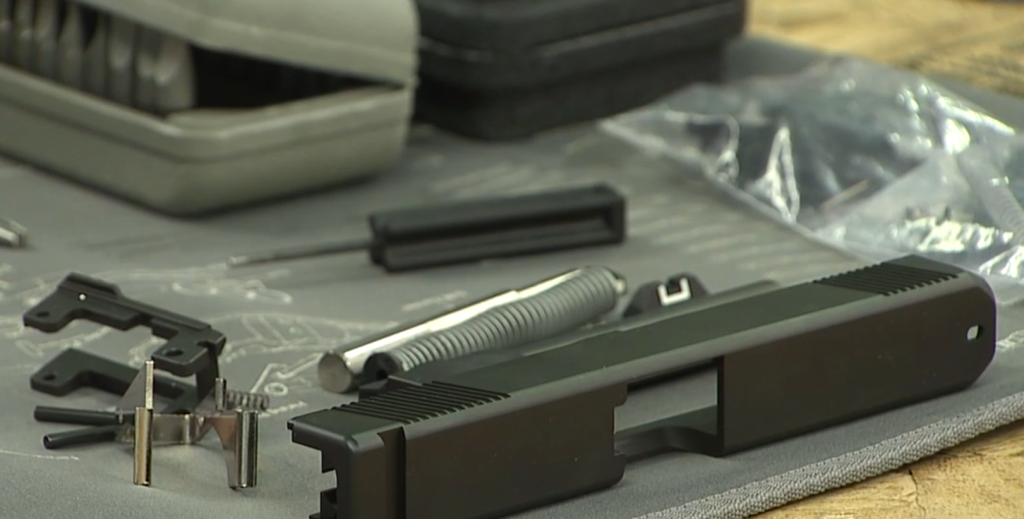
The Second Amendment does not expressly use the word “manufacture.” It protects the right of the people to “keep and bear Arms.”
But practically speaking, a person cannot keep an arm without first acquiring one. Buying a firearm is one way to do that. Building one is another.
Once the court determined that personal gunsmithing was constitutionally protected conduct, the government had to provide historical support for imposing comparable restrictions.
That is where ATF ran into trouble since the idea of making one’s own firearms in this country predates any firearm regulation at all.
The Rule Was Also Too Vague
The Second Amendment was not the government’s only problem.
O’Connor separately held that portions of the rule violate the Fifth Amendment because they are unconstitutionally vague.
Much of the problem comes down to one word: “readily.”
Under the rule, an unfinished component can become a federally regulated frame or receiver if it “may readily be completed, assembled, restored, or otherwise converted” to function as one.
ATF provided a nonexclusive list of factors that could be considered in making that determination, including the time, difficulty, expertise, equipment, availability, expense, scope, and feasibility involved in completing the item.
O’Connor found that this still did not provide ordinary people with a clear legal boundary.
At what exact point does a chunk of metal or polymer stop being an unregulated object and become a firearm receiver under federal law?
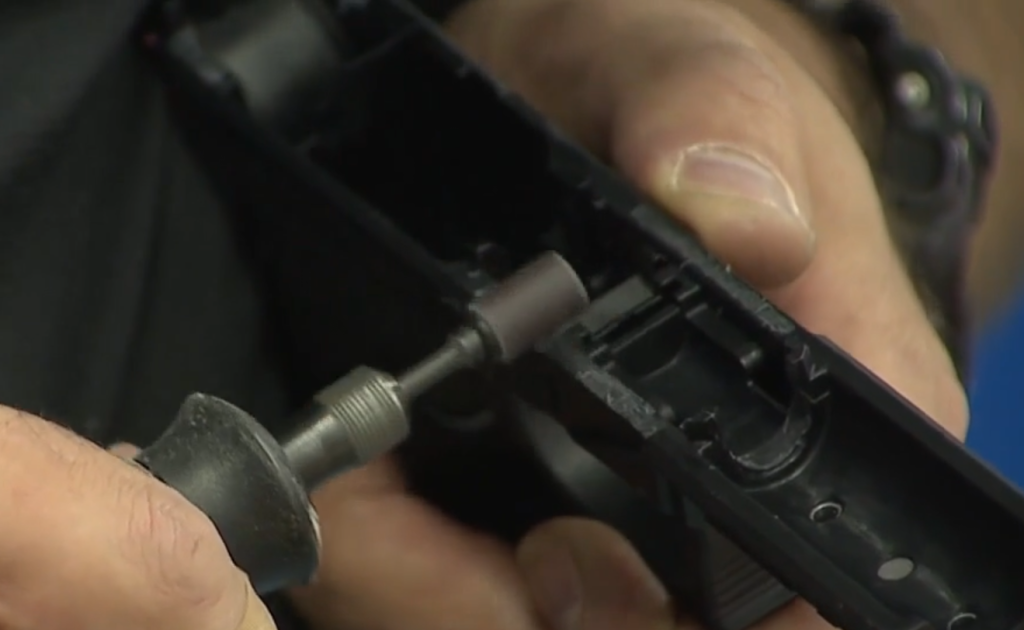
The regulation never provides a sufficiently definite answer.
That matters because violating federal firearms laws can result in criminal penalties. The government cannot leave citizens guessing where criminal liability begins.
O’Connor therefore ruled that the challenged definitions were also void for vagueness under the Fifth Amendment.
What Exactly Did the Court Block?
Ok, some of you may have just skipped down to this section. Lets get into it.
The court declared 27 C.F.R. § 478.11 and § 478.12(c) unconstitutional under the Second Amendment and void for vagueness under the Fifth Amendment as applied to Defense Distributed, the Second Amendment Foundation, and current or future SAF members.
The permanent injunction is narrower still.
O’Connor prohibited the federal government from enforcing those provisions against those protected parties with respect to Defense Distributed’s M1911 80% Frames and its G80 Build Kit, Unfinished Receiver, and Grip Module.
So this is not a nationwide ruling allowing everyone in every state to ignore ATF’s frame-and-receiver regulations.
State law also remains an entirely separate question. States with their own restrictions on unfinished receivers or privately manufactured firearms are not automatically affected by this federal district court decision.
And, of course, the federal government could appeal.
Why This Decision Matters Beyond Ghost Guns
The most important part of this case may ultimately have less to do with the phrase “ghost gun” than with the underlying constitutional principle.
For years, the debate surrounding privately manufactured firearms has often started with the assumption that building a firearm at home is some sort of loophole in federal gun law.
Historically, it is almost the opposite.
Americans were making their own firearms long before federal firearms licensing, serial-number requirements, or the modern Gun Control Act existed.
O’Connor’s decision treats that history not as an odd exception Congress simply hasn’t gotten around to regulating, but as constitutionally relevant evidence about the scope of the Second Amendment itself.
That is a much bigger proposition.
The Supreme Court has not yet decided whether O’Connor is right about that. An appeal could eventually put that question before the Fifth Circuit and perhaps the Supreme Court.
For now, however, Defense Distributed and the Second Amendment Foundation have something they did not have after the Supreme Court’s 2025 decision.
They lost the statutory argument at the Supreme Court. They came back to Texas and won on the Constitution.

I personally believe in the Federalist Papers and our Constitution as written. We The People are spending to much time and money protecting our God given rights. There are far to many politicians, attorneys, and judges who’ve been weaponized against our Constitution and We The People, who need to be terminated of their powers so that we may live in peace.