

The Silencer Shop Ruling Explained: Why the NFA Isn’t Dead and Why the DOJ Just Blew It
Everyone is celebrating the Silencer Shop ruling for the wrong reasons.
As you probably know by now, and as my colleague, Jacob Paulsen, reported a few days ago, a major ruling throwing out certain provisions of the National Firearms Act was issued in Silencer Shop Foundation v. ATF.
At 12:01 in the morning on August 13, 2026, two men walked into the Silencer Shop in Leander, Texas and walked out with suppressors. No Form 4. No fingerprints. No photographs. No $200 stamp, and more importantly, no registration of any kind. For the first time since 1934, two Americans lawfully took possession of NFA items without asking the federal government for permission first.
If you spend any time in the online gun world, you already know what happened next. The internet lost its mind.
“The NFA is dead!”
“Suppressors are free!”
“Go buy one with no paperwork!”
The celebration was immediate, loud, and in a lot of cases completely wrong about what actually happened.
Let me be clear…this ruling is a genuinely big deal, and I am thrilled to see it. What Judge Hendrix did in the Northern District of Texas is the most direct blow the National Firearms Act has taken in ninety years. But if you walked away from your social media feed this week believing that the NFA is gone nationwide, or that any random person can now go build a short-barreled rifle in their garage without a care in the world, you are wrong.
And the unpopular position that will probably catch me some hate is that the Department of Justice passed up the one move that could have made this permanent for the entire country…which is to appeal this ruling. Continue reading to hear my reasons why.
But first, let me walk you through what really happened, who is actually covered, and why I think the smart play was the exact thing that would have made half the gun world furious.
What the Court Actually Decided
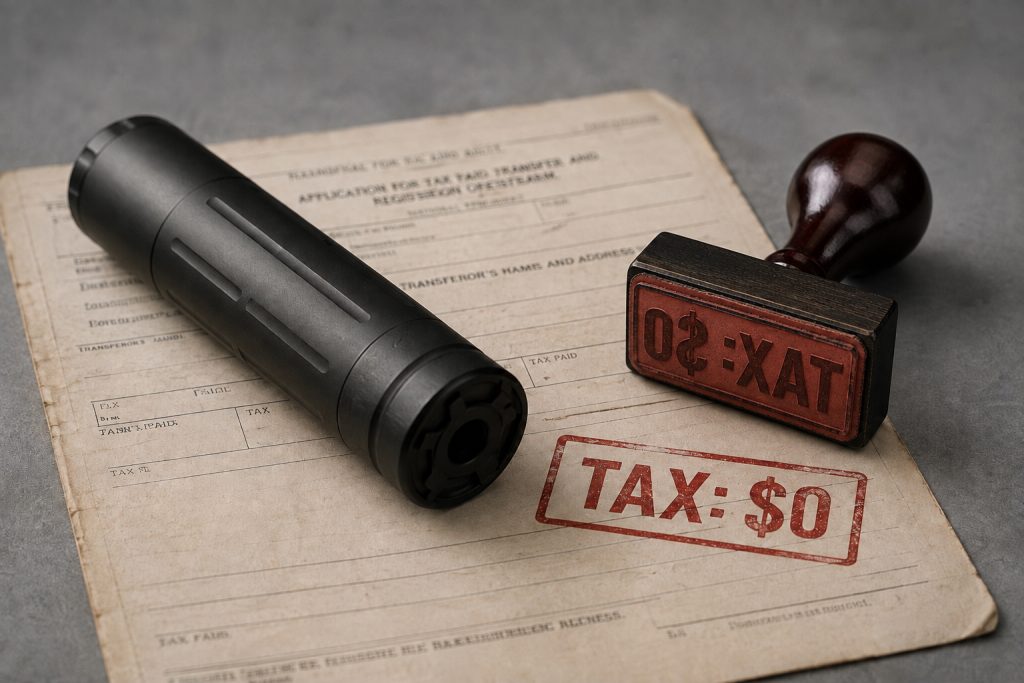
Back in 1934, Congress passed the National Firearms Act using exactly one power granted to it by the Constitution: the power to tax. The NFA slapped a $200 tax on making or transferring suppressors, short-barreled rifles, short-barreled shotguns, and the odd category called “any other weapons,” and it required you to register those items as part of collecting that tax. In 1937, the Supreme Court blessed the whole scheme in a case called Sonzinsky v. United States, and the reasoning was simple. This is a tax, Congress can tax, the registration helps collect the tax, therefore, the law stands.
That $200 sat there, untouched and never adjusted for inflation, for over ninety years. Then last year, in the One Big Beautiful Bill Act, Congress zeroed it out. Effective January 1, 2026, the making and transfer tax on suppressors, SBRs, SBSs, and AOWs dropped to exactly zero dollars. Machine guns and destructive devices kept their $200 tax, which is going to matter in a second here.
So the plaintiffs, a group that includes the Silencer Shop Foundation, Gun Owners of America, SilencerCo, B&T, Palmetto State Armory, and about fifteen states led by Texas, made the obvious argument. The entire NFA rests on the taxing power. The Supreme Court has said many times that the defining feature of a tax is that it raises revenue. A tax of zero dollars raises no revenue. Therefore it is not a tax. And if it is not a tax, the registration and approval scheme built on top of it has nothing left to stand on, because the taxing power is the only power Congress ever invoked to justify it.
Judge Hendrix agreed. Leaning heavily on the Supreme Court’s more recent taxing-power analysis in NFIB v. Sebelius, the Obamacare case, he held that a zero-dollar tax produces no revenue, and a scheme that collects nothing cannot be justified as a tax. The government tried to save it by arguing the registration system still helps the ATF catch unlicensed manufacturers and dealers who dodge the separate occupational taxes that businesses still pay. The court did not buy it. The registration and approval requirements for those four categories of firearms were ruled unconstitutional as applied, because Congress kicked out the only leg the whole thing was standing on.
If you care about constitutional structure, and I do, this is the real prize. The ruling is a reminder that the federal government does not get to do whatever it wants. It has to tie every action to a power it was actually granted. Congress sawed off the branch this 1934 law was sitting on, and a federal judge dropped the hammer.
Wrong Thing #1: “The NFA is Dead Nationwide”
Unfortunately, this federal district ruling in Texas does not get to erase a federal law for the entire country. It just doesn’t work that way–especially now. After the Supreme Court’s decision last year in Trump v. CASA, it is even less how this works than it used to be. In CASA, the Court told lower courts to knock off the practice of issuing sweeping nationwide injunctions that protect everyone in America. The rule now is that a court’s remedy is supposed to cover the actual parties in front of it, not the entire population.
So who is actually covered by this injunction? You can read the order here and see how it applies to “the plaintiffs and, where applicable, the plaintiffs’ agencies, political subdivisions, members, and customers, both current and future.” That is broader than it sounds, but it is not everyone, and the distinction matters enormously.
It does not mean “people who live in the Northern District of Texas.” Geography is not the line. The line is whether you fall inside that protected class. Are you a member of Gun Owners of America? Are you a current or future customer of one of the plaintiff companies like Silencer Shop or SilencerCo? Do you live in one of the plaintiff states? If yes, the ATF is barred from enforcing the registration requirements against you for these items. If no, then nothing changed for you this week. Nothing. The registry still exists, the NFA is still fully enforceable against you, and if you build an SBR in your garage on the strength of a hype tweet, you are committing a federal felony that carries up to ten years in prison.
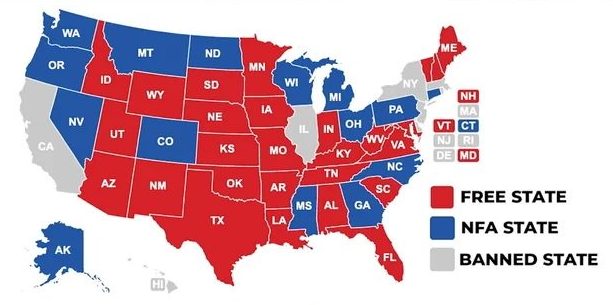
Image courtesy of Silencer Shop.
And even if you are covered, the various laws that some states have still apply. If you live in a state that bans or restricts suppressors, this federal ruling does not override that. The practical guidance floating around the industry keeps drawing a line between “free states” and everybody else for exactly this reason.
I’m sorry to rain on the parade, but I am saying it because I do not want to see a single one of you catch a federal charge because you trusted a meme. Understand where you actually stand before you act. If you want the protection this ruling offers, the path runs through membership and through buying from the covered companies, not through assuming the law evaporated.
Wrong Thing #2: Cheering the Fact That the Government Isn’t Appealing
Now we get to the part that I think almost everyone has backwards.
Judge Hendrix did not make his ruling take effect immediately. He stayed it for seven days, through August 12, specifically to give the Justice Department a window to run to the Fifth Circuit and ask for emergency relief. That window came and went. The government filed nothing. No appeal, no request for a stay. The injunction went live, and those midnight transfers in Leander happened the moment it did.
Then, that same evening, Representative Andrew Clyde, the Georgia congressman who authored the tax-elimination language in the first place, announced that he had received confirmation from the Trump administration that the DOJ will not appeal at all. He thanked President Trump and Attorney General Todd Blanche for what he called the most significant Second Amendment win in over ninety years.
The gun world erupted in gratitude. And look, I get it. A pro-gun administration is standing down instead of fighting to keep a suppressor registry alive. That feels like a win, and in the immediate term it absolutely is one.
But I want you to slow down and think about what actually got locked in here, because I do not think it means what people think it means.
One quick note on accuracy before I go further, because I would rather you hear it from me than get burned later. The fact is that the government let the emergency window lapse and let the injunction take effect. The “will never appeal” part rests on Clyde’s announcement, and the DOJ’s own spokesperson has been noticeably noncommittal in public statements. The formal deadline to file an appeal actually runs for several more weeks (60 days). So the door is technically still open, even if the administration is signaling it plans to leave it shut.
Enter the Windsor Strategy
To understand why I think not appealing is a mistake, you need to know a piece of legal history that has nothing to do with guns.
Back in 2013, the Supreme Court decided a case called United States v. Windsor. It was about the Defense of Marriage Act, and here is the interesting part for our purposes. The Obama administration had already decided that DOMA was unconstitutional and did not want to defend it. But instead of just refusing to enforce the law and walking away, they did something clever. They kept enforcing it, and when they lost in the lower courts, they appealed anyway, all the way to the Supreme Court.
Why would the government appeal a ruling it agreed with?

Because a win in a lower court is small and fragile, and a win at the Supreme Court is enormous and permanent. The administration did not want DOMA struck down in one district or one circuit. They wanted it dead everywhere, forever, in a way that no future administration could reverse. The only institution that can deliver that is the Supreme Court. So they engineered the case up the ladder, took the loss they wanted to take, and walked away with a nationwide, precedent-setting ruling that settled the question for good.
That is the Windsor strategy. You appeal a case you are happy to lose, because losing at the top locks in the outcome for the entire country in a way that winning at the bottom never can.
Why the Refusal to Appeal is the Real Missed Opportunity
What the ATF and DOJ have right now is what lawyers call a remedy. A specific court told the government it cannot enforce these specific provisions against these specific people. That is real, and for the people inside that protected class it is wonderful. But it is not precedent. No appeals court has ruled. The Supreme Court has said nothing. The National Firearms Act has not actually been declared unconstitutional in any way that binds the country. It has simply been switched off for a defined group of plaintiffs, their members, and their customers.
That distinction is the whole ballgame. A remedy protects a class of people in one case. A precedent settles the law for everyone. And here is the uncomfortable truth that all the celebration is glossing over: a policy of not enforcing a law is only as durable as the administration that adopts it and a future Congress which could reinstate a tax.
That is what the refusal to appeal gives up. By declining to fight, the administration keeps the win small, temporary, and reversible. By appealing, and appealing to lose, it could have run the Windsor play and tried to convert a narrow district-court victory into a nationwide, permanent kill shot on NFA registration for these items. Not a policy that lasts until the next election, but a constitutional ruling that outlives all of us.
A Counterargument, And Why it Does Not Hold up
I want to give the other side its due, because there is a real argument for standing down.
By not appealing, the administration hands gun owners immediate, tangible relief right now, without gambling anything. And there is a companion plan in motion. Clyde and nearly fifty other members of Congress are pushing the DOJ to take the ruling and apply it nationwide through official rulemaking rather than through the courts. If that works, you arguably get the nationwide reach without the risk of an appeal. There is also a concern that a sweeping appellate ruling could interfere with similar cases already working their way through courts in Missouri and Kentucky.
I hear all of that. But rulemaking is not precedent either. A rule that one administration writes, the next administration can rewrite. It is the same vulnerability as non-enforcement, just with more paperwork. And the percolating cases in other circuits are an argument for eventually getting this to the Supreme Court, not an argument for never appealing anything.
As for the idea that appealing is a dangerous gamble, I do not buy it. The logic here is close to airtight. The NFA rises and falls on the taxing power, Congress zeroed the tax, and a tax that collects nothing is not a tax. The Fifth Circuit has been one of the most serious courts in the country on Second Amendment questions lately, and it is hard to imagine that panel rescuing a suppressor registry that lost its only justification the day the tax hit zero. The downside was small and the upside was permanent. You take that shot. The only thing that truly ends this fight is a ruling from the top, and you cannot get a ruling from the top if you refuse to climb.
Enjoy the Win, But Understand What it is
This ruling is a real victory, and the people inside that injunction are living in a genuinely new world this week. Celebrate that. It is remarkable, and it was a long time coming. But understand it for what it actually is: a narrow, class-limited, potentially reversible win that applies to members and customers of the plaintiffs, not a nationwide funeral for the NFA.

And understand what the administration passed up. It had a chance to run the Windsor strategy, to take a small win and appeal it into a permanent, national one that no future president could touch. Instead it chose the popular comfortable path, and the gun world cheered because appealing would have sounded like betrayal.
Sometimes the move that looks like surrender is the smart one, and sometimes the move that looks like a fight is the one that actually wins the war. The people rejoicing that the ATF is not appealing may be cheering the exact decision that leaves this whole thing vulnerable to being undone the moment the political winds shift. I would rather have taken the fight, gone to the top, and settled it for good.

Eliminate greedy politicians $$$$$
Give me my right
I am in Texas and a member of the GOA. FFLs are refusing to transfer a suppressor to me with a standard NICS test right now because they fear the ATF will pull their license. When will the ATF come out with some type of clarification to the rules? Maybe never.
Its my opinion that clarification is coming. The NSSF has formally requested some clarification and direction from the ATF and the attorney’s for the plaintiffs in this case have also made a request to the DOJ about how their clients can take advantage of this ruling. I think answers are coming soon.
Does this ruling apply to any supressor in the “free states” or just Silenco since they are one of the class members?
It applies to the plaintiffs and members and customers of the plaintiffs. At a secondary level, there is some concern in states where the state has its own laws about suppressors and that might be what you are referring to. To be practical at this point, we are waiting for the DOJ and the ATF to offer some direction and clarity about how plaintiffs are supposed to proceed to take advantage of this ruling. How is one supposed to prove to the local gun dealer that they are a member of the GOA or a customer of Palmetto State Armory? More clarity and direction is needed.
Personally as a member of GOA and a customer of PalmettoState Armory, I just delighted with the ruling.
We often boil down an argument to “either, or” when sometimes the best solution is neither or both. In this case, I say both. While eliminating the $200 tax stamp opened the market considerably, the Silencer Shop v ATF will open it even further creating an undeniable “common use” situation that the Supreme Court can/will use after they find platform bans unconstitutional with the upcoming AR-15 ban cases to heard this next term, on 2A grounds. Mark Smith has opined that, although limited in scope to specific plaintiff’s at the circuit court level, Silencer Shop/Jensen will create a common use scenario that will eliminate the bans on suppressors, SBRs and SBSs, along with ARs and Magazines. It could take another year to get the 2A cases there, so patience will win the day as long as we win upcoming elections. Got to keep the majority folks.
I don’t see how this was a win at all. The headache of having to register nfa items through the atf is still very much present. That’s not a win. Who cares about not having to pay the $200 for the tax stamp? That’s not the problem and it never was. It’s the process of having to get the government’s permission for ownership. I’d rather pay the $200 to avoid having to go through that than what ended up happening. Not having to pay the $200 is insignificant. It means nothing. And it seems that silencer shop and all their buddies only looked out for themselves. The GOA is supposed to represent gun ownership as a whole. Not just a select group of friends who live in Texas. What’s even worse is that silencer shop is still the only entity that can get you approved. Which is not optimal for anybody who doesn’t live in Texas and doesn’t buy their proprietary silencers. While I’d like to call it a victory, I cannot. Because nothing actually changed other than the $200 for the tax stamp. Everything else is exactly as it was prior to whatever silencer shop supposedly did. They sued the ATF to cover their ass and nobody else’s. How is that a win for the 2nd amendment? Those same restrictions still apply.
Johnny, I respectfully disagree. Your comment would feel very on point if it was written 6 months ago when the only victory was the removal of the $200 tax. This new victory does do away with the entire registration process; yes only for a select group of people but for about $20 you could go join the GOA right now and be among that select group. Is it as good as doing away with the NFA fully? No. Is it progress? Yes. Is it as good as the NFA being dead for the majority of Americans who are willing to be a little proactive? Yeah, pretty much. The benefits of this lawsuit apply not only to customers of SilencerShop but to all customers of Palmetto State Armory. They sell products as low cost as $3.99 so you could be a customer of theirs for little to nothing and as I already mentioned it costs very little to become members of one of the other plantiff organizations. These organizations didn’t choose to limit the scope to their members/customers. That is just how the law works. They spent a great deal of money to get this far and they will keep fighting to take it further. Is it a full victory? No. Are we better off than we were 6 months ago or 6 years ago? Yes.
“I don’t see how this was a win at all. The headache of having to register nfa items through the atf is still very much present.”
No, it isn’t. But the reality does require taking the time to understand the injunction. I just bought a suppressor on a 4473.