

Nobody Else Will Know What Happened in Your Gunfight
When you’re the one who was there, the facts feel obvious. You saw it. You felt it. You know exactly why you pulled the trigger.
That certainty is earned, and it’s also a trap. The moment the police arrive, what you know and what anyone else can prove become two very different things.
This is the next lesson I took from watching nearly 88 hours of the George Zimmerman trial, and I don’t think most of us plan for it: nobody else will know what happened in your gunfight.
The Curse of Knowledge
Psychologists call it the curse of knowledge. I know it better as a form of cognitive dissonance known as information bias. Once you know something, it’s really hard to imagine not knowing it.
After a defensive shooting, that’s you. Now put yourself in the responding officer’s shoes. You didn’t hear the threats or see the attack. You pull up and find one person shot and another person saying it was self-defense.
What do you actually know? A lot less than the person holding the gun thinks you should. I realize that to most of you reading this, the entire idea and concept seems obvious. However, we see a lot of instances where that information bias gets people in trouble and in the case of George it may have ruined his life… at least a decade or so of it.
Investigators, prosecutors, and jurors are in the same spot. They don’t get to experience what happened. They reconstruct it from whatever’s left behind, and that reconstruction decides whether you’re charged, tried, or convicted.
Zimmerman Had More Evidence Than Most of Us Ever Will
Here’s what struck me. The Zimmerman case had eyewitnesses, recorded 911 calls, physical evidence, forensic testimony, medical experts, and multiple statements from Zimmerman himself. That’s far more than most defensive shootings will ever produce.
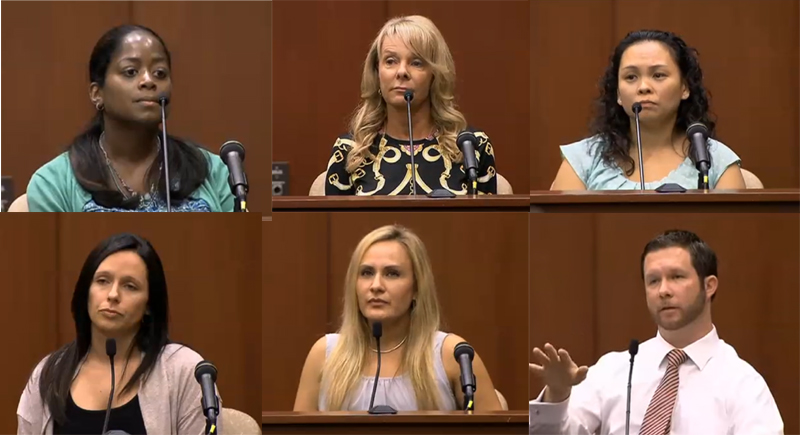
Neighbors who saw and/or heard the Zimmerman / Martin fight and testified in court.
And almost everything that mattered was still contested. Despite all that evidence it still took 14 days of trial and testimony and at the end the prosecution still would have you not believe it.
Take the screams on a neighbor’s 911 call. Trayvon Martin’s mother testified it was her son’s voice. George Zimmerman’s mother testified it was hers son’s voice. An FBI audio analyst testified the recording wasn’t suitable to identify who it was. The most chilling piece of evidence in the case couldn’t answer the most basic question: who was yelling for help?
The eyewitnesses weren’t much better. One neighbor described the person in darker clothing on top, in what he called a ground-and-pound motion. Others caught different moments from different angles, at night, in the rain.
It’s like working a puzzle without the picture on the box. You can build something that looks right. Someone else can use the same pieces and build something different. That doesn’t mean the truth is unknowable. It means the evidence may not be enough to prove it.
Video Doesn’t Settle It Either
If you’re thinking a camera would solve this, look at the Kyle Rittenhouse trial. Much of what happened that night in Kenosha was on video.
The lawyers still fought over all of it. The prosecution enlarged a frame of drone footage and argued it showed Rittenhouse pointing his rifle before the first shooting. The defense argued it showed no such thing and challenged the enhancement itself. Same footage, opposite stories.
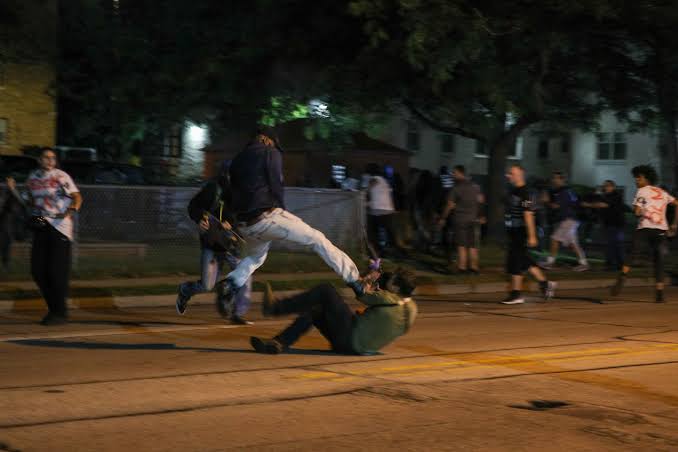
The Rittenhouse trial ran 11 days despite there being video evidence of the events that transpired.
Cameras miss what’s outside the frame, and they can’t record what you reasonably believed in the moment. Evidence still has to be interpreted, and the interpretation may not go your way.
Your Memory Isn’t a Recording
You’re not as reliable a witness as you think, either.
Under stress, attention narrows. You’ll remember some details vividly and miss others completely. That doesn’t mean you should distrust everything you remember, but you need to know the difference between what you saw and what you assume must have happened.
Attorneys in the Zimmerman trial spent hours lining up his different accounts side by side and arguing over the differences. Some were real inconsistencies. Some came from imperfect memory or how the questions were asked. To a jury, they can all look the same. (I covered how that plays out in Every Decision You Make Could Be Used Against You in Court.)
So if you don’t remember something, you don’t remember it. Don’t fill in the blanks because someone expects you to have every answer.
The Police Aren’t Your Defense Attorney
A lot of carriers picture the aftermath like this: you defend yourself, the police show up, you explain, they nod, everybody goes home.
Maybe. But don’t count on it. The officers weren’t there. Witnesses may be confused. The person you shot may have friends telling a completely different story. The police have an investigation to run. That doesn’t make them your enemy, but it doesn’t make them your lawyer either.
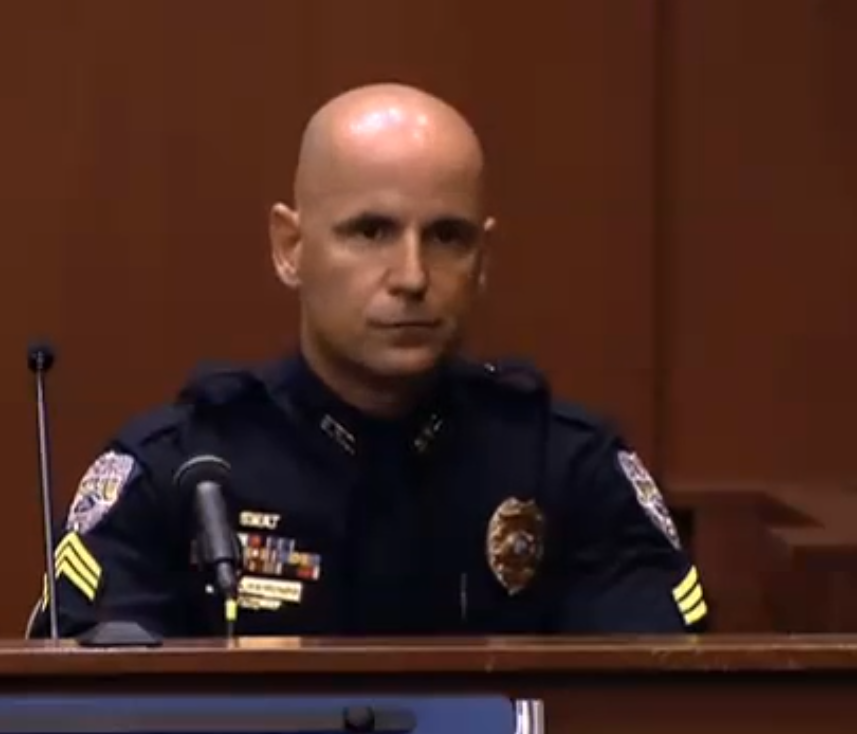
The 2nd officer to respond to the Zimmerman crime scene despite being highly decorated and experienced couldn’t tell at all what had happened. As an interesting aside, he did fashion an improvised chest seal out of a plastic bag in an effort to save Trayvon’s life.
Being the victim of an attack and being recognized as the victim are two different things.
So handle the scene, and stop there. Comply with commands. Tell them if someone’s hurt, if there’s still a threat, where your gun is, and who saw what before those witnesses walk away. Point out any cameras that might have caught it. Then say clearly that you’ll cooperate once you’ve spoken with an attorney.
Actually say it, too. In Berghuis v. Thompkins (2010), the Supreme Court held that just staying quiet doesn’t invoke your right to remain silent. You have to invoke it clearly.
Every instinct will tell you to explain. You want them to understand why you were afraid. But you don’t know what they’ve been told or what evidence they have, and you’re running on adrenaline about something that happened in seconds. That’s not the moment for your full account. A good defense attorney isn’t there to help you craft a story. They’re there to protect your rights and make sure your account and the evidence get a fair look.
Build Your Legal Plan Now
Most of us spend way more time preparing for the shooting than for what comes after. We buy guns, holsters, and classes. We practice. Good. But who are you calling?
You don’t need a lawyer on retainer. You do need to know who you’d call, whether they’ve actually handled self-defense cases, and how to reach them on the worst day of your life. And make sure someone close to you knows the plan. A plan that depends on you remembering a phone number from an interview room isn’t much of a plan.
That’s why we recommend CCW Safe. When you call, you’re not talking to a call taker reading from a script. You get an attorney on the line, backed by a response team of former investigators and prosecutors. These are people who have worked the other side of exactly the kind of investigation we’ve been talking about.
The person who answers might even be Don West. If that name sounds familiar, it should. He was George Zimmerman’s defense attorney. It’s hard to find someone who knows better how difficult it is to reconstruct a few seconds of violence in front of a jury.
What to Take Away
You can make a completely justified decision to defend your life and still face an investigation that questions your actions, your judgment, and your story. Being justified doesn’t mean everyone will see it. Being truthful doesn’t mean you’ll be understood. Being there doesn’t mean you remember it all correctly.
- Expect the people investigating to know far less than you do.
- Handle immediate safety needs at the scene, then clearly ask for an attorney.
- Don’t guess, fill gaps, or predict what the evidence will show.
- Point investigators to witnesses and cameras before they disappear.
- Have your legal plan in place, and make sure someone else knows it.
Nobody else will know what happened in your gunfight the way you do. Make sure you’re not the only one looking out for you while they figure it out.
