

Concealed Carry on Campus: 10 Lessons From a Student
I was sitting on an exam table in the campus student health center, suffering from a sinus infection, in the middle of getting looked at by a doctor, when a university police officer opened the door and let himself in.
“Are you carrying a gun?”
“Yes I am.”
“Do you have a valid permit to carry?”
“Yes I do.”
He asked to see it. I showed him. He confirmed it was good, thanked me, and left. The doctor and the assistant in the room with me had absolutely no idea what to do next, and I don’t blame them. That appointment got a lot quieter after that.
To this day I have no idea who saw my gun, where they saw it, or what I was doing when it happened. Somebody spotted something, and that person chose to quietly call university police instead of the alternative loud panic response you might expect. I got lucky.
I started college at age 21, about two weeks after I got my first concealed carry permit, at a school in Utah. Utah has one of the longest track records in the country on allowing campus carry and for all I know I passed other armed students in the hallways every day.
I carried every day for the two-plus years I was enrolled before I eventually dropped out. I learned a lot in that time, some of it the hard way. Here is what I would tell a student starting this fall.

Start with the legal question
I am going to assume you have already done your homework and confirmed you can legally carry where you go to school. If you haven’t, stop reading and go do that first.
I like to sort states into three buckets. A handful explicitly allow campus carry. A handful explicitly prohibit it. The largest group leaves the decision to the individual school, which means the answer depends on your specific campus policy and not on your state’s general carry laws.
We maintain a breakdown of where each state currently sits on campus carry at universities and colleges. Use it as a starting point, not as your final answer.
I say that because this area moves fast. As of this writing, in the past 12 months, lawmakers in Florida, Louisiana, New Hampshire, South Dakota, Utah, and Wyoming introduced bills impacting campus carry. Don’t trust a Reddit thread.

My home state just recently established a stronger campus carry legal system
Even in a state that permits it, you might need to dig deeper to discover:
- Campus policy. Some schools carve out specific buildings, labs, athletic facilities, or event spaces.
- Housing contracts. Your dorm or campus apartment lease may prohibit firearms even where campus policy allows carry. That is a contract you signed, and it can cost you your housing.
- Student versus employee status. If you work on campus, a second set of rules may apply to you. Some states only extend campus carry to faculty and staff, or only to students, and not both.
- Off-campus affiliated property. Clinical rotations, internships, field sites, and study abroad all have their own rules.
The consequence structure on a campus is also different from anywhere else you carry. A mistake off campus might be a citation. A mistake on campus can be a citation plus a student conduct hearing, plus loss of housing, plus loss of financial aid, plus a permanent notation on your record. Worth knowing before you find out the hard way. If you want state law in your pocket instead of buried in a browser tab, grab our app. It is the fastest way to check yourself when you are two states from campus over Thanksgiving break.
Concealment on a campus is a different job

Every concealed carrier should use a quality holster and strive for real concealment. That is not campus specific advice, it is just advice, and if you have never run your rig against our holster safety checklist, do that before you do anything else in this article. But the consequences of getting it wrong on a campus are not the same as getting it wrong at the hardware store.
Think about what a normal school day actually looks like. You are on that property for six, eight, ten hours. You are surrounded by thousands of people, many of them inside your social circle or bubble. You bend over to pick up a dropped notebook. You reach up for a book on a high shelf. You sit down in one of those desks with the tablet arm welded to the chair and twist sideways to write. You take your backpack off and the strap drags your cover garment up with it.
And you are doing all of that in front of a population that has been trained since kindergarten to be extremely alert to the possibility of a school shooting. Fair or not, that is the crowd you are printing in front of.
So my rule is simple. If there is any realistic movement in your day where your gun might become visible, you don’t have a good enough concealment system for school.
Actually test it
Put on what you would wear to class. Load the backpack the way you would load it. Then go stand in front of a mirror and do the whole routine. Sit. Stand. Bend at the waist. Reach overhead. Shoulder the pack and take it off. Tie your shoe. Twist to grab something behind you.
Then have somebody you trust watch you do it. You are the worst possible judge of your own concealment because you already know where the gun is.
The campus wardrobe problem
College dress code is… well flexible. Within the confines of your campus dress code you probably can wear a lot of different clothing. Figure it out. Experimentation is your friend.
Two things helped me. First, a holster that actually holds position under load instead of shifting every time the backpack moves. A quality gun belt matters as much as the holster here, so be sure to dig into that. Back then I carried my gun at about 4 or 5 o’clock behind the hip like everyone else and that is not a very compatible position to carrying a backpack and getting in and out of desk chairs all day. These days the popularity of appendix carry and the quality appendix holster options on the market are a no brainer for a college student.

Do not let your backpack become your holster
It can be all too tempting to grab a decent pocket holster (or not) and just shove your gun in your backpack. There are a lot of sling bags and backpacks for sell (many of which we sell right here on this site) that have concealed gun purpose built pockets and compartments.
However, Off-body carry means the gun is no longer attached to your body. On a campus, that means the gun gets set down. Under the desk in a lecture hall. On the floor of the library while you go find a book. Leaned against a table in the student union while you get in line. Left in a dorm room with the door propped open.
It also means your draw depends on unzipping a compartment under stress, which is a lot slower than you think it is. Carry on body.
I would rather you adapt your habits and lifestyle to responsible carry the gun in your backpack then leave it home, but its a far cry from being ideal. I strongly recommend figuring out an on body option that can work for you.
You are walking everywhere, and a lot of it is in the dark
The University I attended was basically one really big building but my son attended a more traditional looking campus this summer which consists of more than 20 buildings and that means a lot of walking to and from.
Most students walk. Constantly. Between buildings, to the parking structure, back from the library at 11 p.m., across a poorly lit quad in February when the sun set four hours ago.
Low light isn’t an edge case for a college student. It is a daily condition.
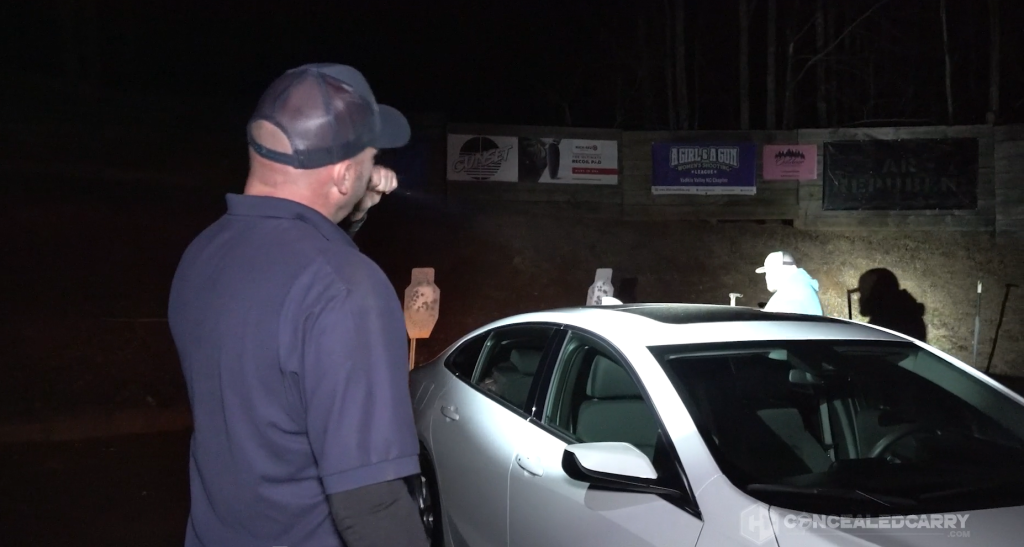
A good handheld light is not optional gear. It does three jobs at once. It lets you see and identify what is in front of you, it gives you a tool that isn’t a gun, and ultimately it removes ambiguity. Gives you information and denies a potential threat information. Something in the 20,000 candela range and up will absolutely change the terms of an encounter in a dark parking lot.
It is also the one defensive tool you can carry basically everywhere without anyone caring. Nobody has ever given me grief about a flashlight. If you are new to this, start with our intro to defensive flashlights, then go pick one from our handheld light selection.
One more thing while you are on walking. Take out at least one earbud. I know. But you cannot make good decisions about the guy walking behind you if you can’t hear the guy walking behind you.
That said, you are going to spend a genuinely absurd number of hours walking across that campus, and one ear is still one ear. That is prime training time. Subscribe to our podcast and let the walk between your 10 a.m. and your noon do some work for you. Over a semester it adds up to real education you didn’t have to schedule.
Roommates, storage, and having the conversation
I lived in my parent’s basement and then in an off campus apartment with my wife when I was in school but most college students live with other random adults far more often than the average adult does.
If you share a bedroom, your roommate is obviously going to find out you own a gun. Plan on that conversation happening rather than hoping it doesn’t.
Have it early and have it straight. You are legally permitted, you take it seriously, you don’t handle it casually, and it stays secured when it is not on you. Most people respond to calm confidence a lot better than they respond to discovering a gun by accident in a nightstand.

This certainly doesn’t look like a dorm room but I felt like I needed a picture right here in the article and this will have to do.
Even if you have your own bedroom, you almost certainly have roommates you met eight weeks ago. You cannot vouch for them. You cannot vouch for their friends at 1 a.m. on a Saturday, and you definitely cannot vouch for their friends’ judgment about whether it would be funny to pick up your gun.
So storage has to be real storage:
- It locks, and it is a lock that resists a curious 19-year-old with a screwdriver and twenty minutes of free time.
- It is physically secured to something. A cable through a bed frame, a bolt into a wall stud, a safe anchored to the floor. A small unsecured lockbox is a container that walks out the door with the gun still in it.
- You can access it quickly if you actually intend it to be your home defense gun.
- It goes with you when the room turns over, and dorm rooms turn over constantly.
Dorm life is a jovial, loose, everybody-in-everybody’s-room environment. Your storage plan is the thing that communicates this part of your life is not part of that.
The alcohol problem
I will keep this short because it does not need nuance.
Do not drink while armed. Not one beer. Not “I’m fine.” The potential legal concerns aside, it is wholly irresponsible. In my own opinion, you would absolutely be better off with no gun at all then armed and drinking. And you are in the demographic and the environment where alcohol is present more than almost anywhere else in American life.
The plan is simple. If drinking is on the table tonight, the gun is secured at home before you leave. Decide that at 6 p.m. when you are sober, not at 11 p.m. when you are not. If you aren’t comfortable being without that layer of protection you could just decide to not drink.
Places you can’t carry, and what to do instead
Even on a permissive campus, you are going to run into venues that are off limits. Football games. Basketball arenas. Concerts. Graduation. Career fairs at a convention center. Anything screened, ticketed, or federally controlled.
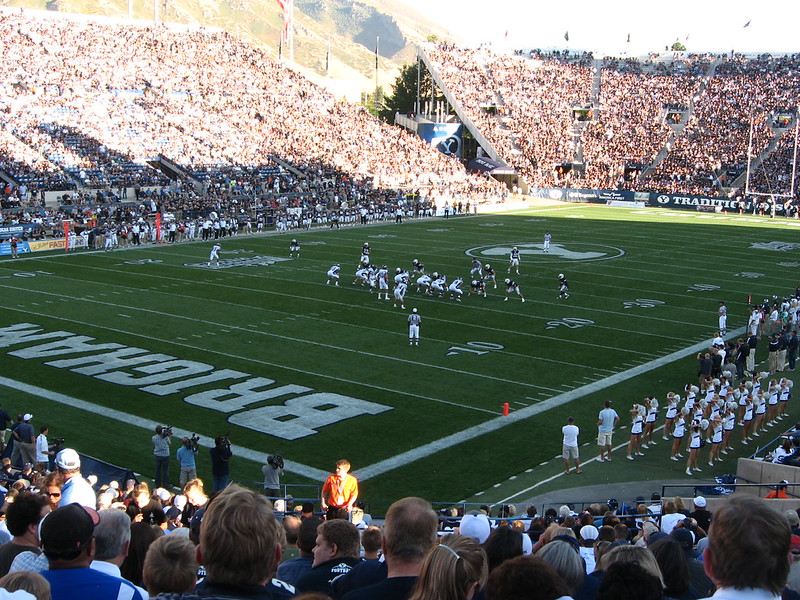
Figure this out before you are standing at the gate holding a ticket. Know what your school’s parking lot policy says about firearms in vehicles. Vehicle storage rules are their own separate question on a lot of campuses and they frequently differ from the on-campus carry rule.
This is where non-lethal tools earn their spot. Pepper spray is a good idea for anyone serious about self-defense and college students are not an exception. My honest experience: I would guess I have walked through screening at “secure” facilities with pepper spray on me dozens of times, and it has been caught maybe one out of every twelve. When it gets caught, I walk it back to the car and come back. No drama.
That said, check your school’s policy. Some campuses restrict pepper spray by size or formulation, and a student conduct violation is its own kind of expensive even when nothing criminal is involved.
Don’t want to risk it at all? Take the flashlight. A 20,000 candela handheld is not a prohibited item anywhere I have ever been, and it is a legitimate force multiplier in a place where you would otherwise be completely empty handed.
Use the backpack for the things you can carry everywhere
Here is an underappreciated advantage of being a student. Nobody thinks twice about you carrying a backpack into every single room you enter.
Two things I would put in it.
A soft armor ballistic insert. It’s a panel in a bag, not a plate carrier, and it only helps if the bag is between you and the threat. But it weighs very little, it costs less than a semester’s worth of textbooks, and it gives you something you otherwise have exactly zero of.
Trauma gear. Far more likely to matter than anything else in this article. Car wrecks, dump people, kitchen injuries, a bad fall off a bike, and yes, active shooters. If nobody has ever walked you through why this belongs in your kit, read our introduction to trauma medicine first. The Green IFAK was built for exactly this purpose and it fits in a backpack without any fuss.

- Take a Stop the Bleed class. They are frequently free and might even be offered on campus.
- Get CPR and AED certified.
Then walk your buildings. Modern campus construction usually puts bleeding control kits and AEDs in the hallways right alongside the fire extinguishers. Know where they are in the three or four buildings you spend the most time in.
Your online presence is part of this now
You owning a gun should not be anyone’s concern. I believe that. I also live in the real world.
Campuses are, even in conservative states, environments where a lot of people are genuinely alarmed by firearms. And we have too many examples of students getting reported, investigated, censured, or disciplined because a photo surfaced of them at a range and a classmate read it as a threat.
I am not going to tell you what to do with your social media. I am telling you what the risk looks like. If you post range photos while you are enrolled, understand there is a nonzero chance that ends up in front of a dean who has to decide whether to take it seriously. However remote you think that possibility is, decide in advance whether it is worth it. Don’t find out by accident.
The related principle is older and simpler. The fewer people who know you carry, the fewer people can make it a problem. Your carry status is not a personality trait and it is not conversation filler at a party.
Going home for break is a legal event
A lot of students go to school in one state and go home to another. Every drive between those two places crosses jurisdictions with different reciprocity, different transport rules, different magazine and ammunition restrictions, and different rules about what counts as secured in a vehicle.
Map that route before you drive it, not at a gas station in the state that doesn’t honor your permit. And if you are flying home, TSA rules and the airline’s checked firearm process are their own project. Start it more than a day before your flight.
If you get made
Back to the exam table.
The thing that made that encounter a non-event was that it was boring. I was polite. I answered directly. My permit was on me and I could produce it. There was nothing to argue about because I was doing exactly what I said I was doing.
If a campus officer approaches you, that is your whole playbook. Keep your hands visible. Don’t reach for anything without saying what you are reaching for. Answer the question you were asked. Produce your permit. Do not lecture anybody about the Second Amendment while a cop is standing in front of you in a doctor’s office. There is a time and place for that argument and it is not that one.
And carry your permit. Physically.
The short version
If you take nothing else from this:
- Verify state law, campus policy, and your housing contract. All three, in writing, before move-in.
- Concealment has to survive a full campus day, not a mirror check. Test it with the backpack on.
- Keep the gun on your body. The backpack is not the best holster.
- Carry a real handheld light. You will use it constantly and it is legal everywhere.
- Buy storage that locks and anchors to something. Then have the roommate conversation on purpose.
- Drinking and carrying never overlap. Decide before you go out.
- Know your no-carry venues in advance and have a non-lethal answer for them.
- Trauma gear in the bag, training in your head, and know where the AEDs and bleeding control kits live in your buildings.
- Assume anything you post can land on a dean’s desk.
Carrying on campus worked for me for two and a half years, and the one time it went sideways it was because of a concealment failure I never even detected. That is the lesson I keep coming back to. On a campus, the failure you never notice is the one that finds you.
Do the boring parts well and the rest of it takes care of itself.

Thank you for your honesty, my son started college this last week and I know he Can Not have a gun on campus , nor can he get a permit till he is 21. You brought up great ideas that I never thought about. Thank you so much for your suggestion I will get him a good flash light and other stuff for protection. I will feel better knowing he has some protection. Thank you so much he is my miracle baby baby and I cherish him ever day, the thought of something happening to him is scared for me.