
Most gas station robberies don’t begin with someone driving a minivan through the front of the building. But that’s exactly what happened at a Circle K in Stow, Ohio, early on November 2, 2026.
Four suspects arrived in two stolen minivans at approximately 3:30 a.m. One repeatedly backed into the storefront, shattering the entrance and dislodging an ATM. When the suspects moved toward the store, employee Kendrick Watson drew his firearm and fired seven shots. The suspects fled.
Police say Watson won’t face criminal charges. But the incident created a second problem for the six-year Circle K employee: his employer’s policy against firearms.
This Wasn’t Your Typical Convenience Store Robbery
I’ve watched plenty of surveillance videos of convenience store robberies. Usually, a suspect walks through the door, threatens an employee, and demands money. This was something else entirely.
The suspects used a stolen minivan as a battering ram, repeatedly smashing through the front of the store. A second stolen minivan was positioned nearby. According to police, the apparent objective was to steal the ATM.

Watson wasn’t alone. Another employee was working with him, and four suspects were involved. Two employees facing four attackers who have already demonstrated a willingness to destroy the building are dealing with a very different problem than an ordinary property crime.
Watson told FOX 8 that he didn’t feel his life was threatened until he saw multiple people rushing toward the store. That’s when he decided to shoot.
The distinction is important. Watson wasn’t simply firing at people stealing an ATM. By his account, he believed he and his coworker were about to be attacked. He couldn’t know whether the suspects were armed or what they intended to do once they got inside.
And let’s not pretend gas station employees have nothing to fear from violent criminals. Convenience store clerks have been murdered during robberies. An employee facing several suspects who have just driven a vehicle through the building has good reason to take the possibility of violence seriously.
Seven Shots, Four Suspects, and One Stopped Attack
Watson fired seven rounds. The suspects scattered, abandoning the attempt to take the ATM. Police subsequently arrested one suspect.
From the standpoint of stopping the immediate threat, the gunfire was effective. The suspects fled, and neither employee was reported injured.
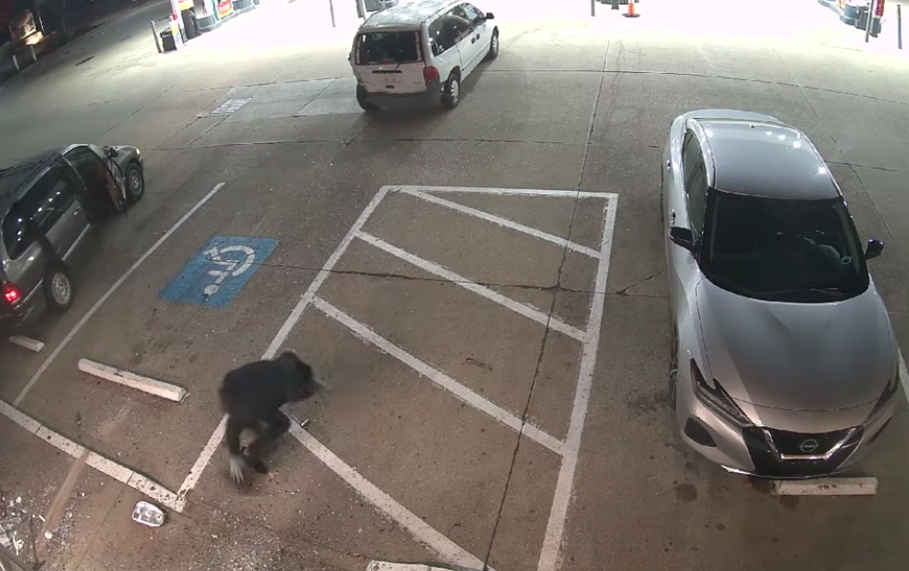
But we also need to talk about where those bullets went.
According to Stow police, rounds struck a gas pump, one of the suspects’ vehicles, and a support post beneath the station’s canopy. Police did not establish whether any fleeing suspect was wounded but from the surveillance video it doesn’t look like it.
I don’t want to be too harsh on the employee who took action to save his life and the life of his coworker but it seems to me that he shooting was more of a pray and spray than any sort of meaningful and effective marksmanship.
It’s easy to criticize someone’s marksmanship while sitting comfortably at home watching surveillance footage. It’s considerably harder to shoot accurately when several criminals have just crashed a vehicle through your workplace and appear to be coming toward you.
Still, responsibility for every round doesn’t disappear because the shooting was justified. Defensive training needs to include realistic pressure, target accountability, and decision-making, not just tight groups on a stationary range.
Watson stopped the attack. That’s significant. But we should recognize a successful defensive outcome while acknowledging the shooting-performance concerns.
Police Say the Shooting Was Lawful
Stow police investigated and confirmed that Watson was lawfully in possession of his firearm. They stated that he would not face criminal charges related to the shooting.
Ohio has no duty to retreat and even if it did it would be easy to argue that didn’t apply in this situation. That doesn’t mean Ohio or any other state authorizes deadly force merely to protect an ATM. The circumstances surrounding a reasonable belief that deadly force is necessary remain critical.
The suspects had repeatedly rammed an occupied business with a vehicle, destroyed its entrance, and approached the employees. Watson said he feared for his life and his coworker’s life and that sounds reasonable to me and apparently to the district attorney too.
The Second Fight Was Over Circle K’s Gun Policy
After surviving the robbery attempt, Watson faced a very different problem.
Circle K reportedly maintains a policy prohibiting employees from possessing weapons at work. Watson acknowledged that policy in local interviews.
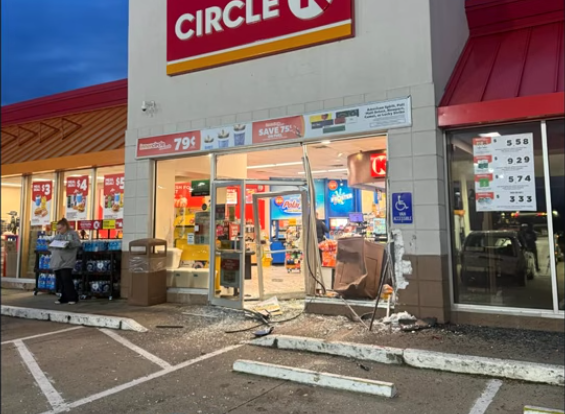
Initially, Watson said he believed he had been fired. He was taken off the schedule and told not to report to work. Several news outlets subsequently reported that he had lost his job for defending himself.
However, later reporting from News 5 Cleveland clarified that Watson was eventually told he could return. He decided not to, questioning how he could safely continue working under the company’s weapons prohibition.
We shouldn’t claim Circle K definitively fired him when the latest reporting indicates otherwise. But it doesn’t make the underlying conflict disappear.
Watson had worked there for six years. After an attack in which he believed a gun was necessary to protect himself and another employee, he was faced with returning without that same means of protection.
When Your Employer Says You Can’t Carry
Circle K is hardly alone. Many employers restrict firearms in the workplace, including those carried by employees who can otherwise lawfully possess them.
We’ve maintained a list of businesses with policies restricting firearms for years. Policies vary, and some may have changed since our original reporting, but the broader problem isn’t new.
There’s an important distinction between what criminal law permits and what an employer allows. Depending on state law, carrying at work may be legal while violating company policy. Some states protect certain firearm possession in vehicles parked at work.
In other words, avoiding criminal charges doesn’t necessarily protect your paycheck.
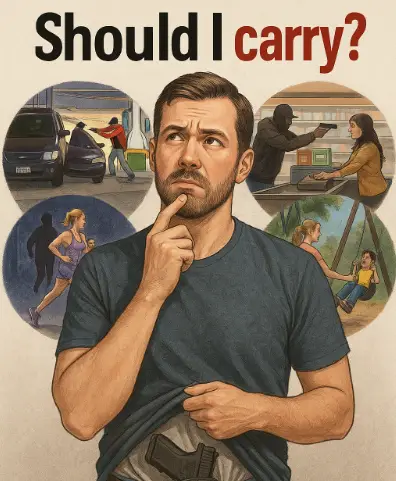
Anyone choosing to carry against an employer’s policy needs to understand that distinction. Losing a job or facing other employment consequences may be real possibilities.
Not saying thats easy. People have families, mortgages, and bills. Walking away from a good job isn’t something most can casually afford. But a company cannot guarantee that criminals will respect its weapons policy, or that employees will never face a deadly threat.
For some people, the potential consequences of violating workplace policy may be a risk they’re willing to accept. Others may find employment where lawful carry is permitted. Either way, make that decision deliberately.
The Lessons From Stow
Violent encounters don’t always resemble the scenarios we imagine. A robbery can involve several attackers, vehicles used as weapons, and an entrance destroyed in seconds. Training should prepare us to recognize threats and make decisions.
Effective defense and accurate shooting aren’t necessarily the same thing. Watson’s gunfire ended the immediate attack, but the documented bullet impacts remind us that every round matters.
Finally, carrying a firearm involves decisions beyond the range. Legal permission, company policies, financial consequences, and personal safety don’t always line up neatly.
An employer can replace an employee who violates company policy. An employee cannot replace his life.

One Response
Jacob,
This was only about 20 minutes south of me.