
Back in 2017 I wrote an open letter to college faculty who were losing sleep over campus carry. Instead of arguing about feelings, I did the math. I took every student permit holder I could reasonably estimate in Colorado, Idaho, and Utah, multiplied by every semester those states had allowed campus carry, and then counted the incidents. The answer was zero.
If you missed it, you can read A Data Driven Approach To Analyzing Campus Carry. The short version: the thing people were afraid of wasn’t showing up in the data.
Now we have a much bigger dataset for a much more emotional question. Should K-12 teachers and staff be allowed to carry guns at school?
What the New Study Found
In November, economist John Lott (Crime Prevention Research Center) and University of Georgia economics professor David Mustard released a working paper titled Schools that Allow Teachers to Carry Guns are Extremely Safe. They built a database of every K-12 school shooting they could find from January 2000 through December 2025, pulling from the Washington Post’s database, the K-12 School Shooting Database, the Gun Violence Archive, federal civil rights data, and direct calls and emails to schools and police departments.
They found 1,057 incidents involving gunfire on school property. Then they sorted those incidents by whether the school allowed teachers or staff to carry at the time.
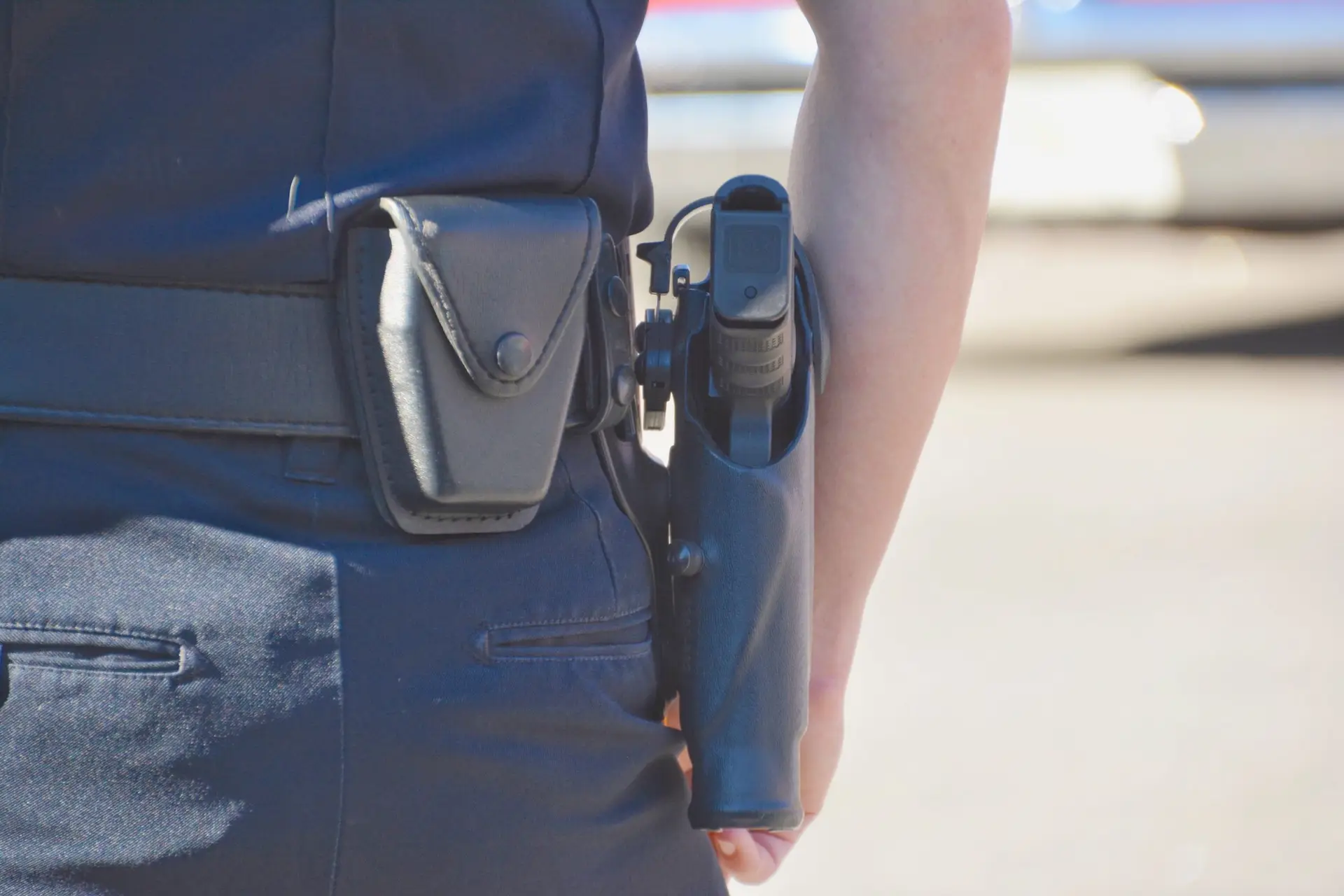
Here is the headline. At schools that allow teachers or staff to carry, nobody was wounded or killed in a shooting attack during or anywhere near school hours. Not once in 26 years. No mass shootings, either.
That’s a strong claim. There were two shootings with victims on the property of schools that allow staff carry. Both happened in Utah high school parking lots, and both happened in the middle of the night. One was at about 2:30 a.m. in July 2017 at Spanish Fork High School. The other was at about 1:50 a.m. on a Sunday in May 2025 at Kearns High School, during an attempted robbery. Nobody would expect a teacher to be on campus at either hour.
The researchers estimate that at least 13,156 of the roughly 99,000 public schools in the country, across 28 states, now allow some form of teacher or non-uniformed staff carry.
Where are these schools?
In the 2003 legislative session, Utah took away school boards’ ability to exempt school property from the state’s concealed carry law. The change took effect in June 2003. Since then, any teacher, custodian, secretary, or bus driver with a Utah concealed firearm permit can carry at school, and the district can’t stop them.
It goes further than that. Utah school districts aren’t allowed to ask employees whether they have a permit or whether they’re carrying. Nobody keeps a list, so parents and principals don’t know who’s armed. Neither does anyone planning an attack.
The first Texas district to arm staff, tiny Harrold ISD, didn’t start until 2007. Colorado’s first district came along in 2013. Florida’s Guardian Program was created after Parkland in 2018. Most of the 13,156 schools in the study adopted their policies in the last eight years.
Utah is the closest thing we have to a long-running natural experiment. More than two decades, every public school in the state, and no ability for districts to opt out.
So How Many Utah Schools Actually Have an Armed Adult?
This is the fair question critics will ask. “Allowed to carry” doesn’t mean anyone is carrying.
Clark Aposhian, senior member of Utah’s Concealed Firearm Review Board and a guy who has been teaching permit classes to Utah teachers since the early 2000s, estimates that about 5% of Utah teachers carry at school. He puts support staff (janitors, librarians, secretaries, lunch staff) higher, at 10 to 12%.
Lott and Mustard plugged those rates into Utah’s actual staffing numbers and school sizes. A school of about 650 students has roughly 29 teachers and 35 other employees. At those carry rates, the odds that nobody in the building is armed are tiny. Their model estimates about a 93% chance that any given Utah school has at least one armed adult. The only schools with real gaps are the very small ones, under 300 students, which account for less than 5% of Utah’s enrollment.
Running the Numbers
Here’s the same kind of napkin math I did for campus carry in 2017. I’ll show my work so you can check it.
- Utah’s law took effect in June 2003. That’s 22 full school years through the end of the 2024-25 school year.
- Utah has about 1,100 public schools today. It had fewer in 2003, so call it 900 a year on average to be conservative.
- 22 years times 900 schools is roughly 20,000 “school years” during which Utah’s staff could carry.
Now compare that with schools in the rest of the country that have no armed protection at all, no officer and no armed staff. The study counted 551 shooting attacks with victims at those schools over 26 years. They make up about 42% of the nation’s public schools. That works out to about one casualty attack for every 2,000 school years.
If Utah schools had faced that same rate, you’d expect about 10 shooting attacks with victims during school hours since 2003.
The actual number is zero.
Now the honest caveat. This isn’t a controlled study. Utah has lower violent crime than a lot of the country, and many of those 551 attacks happened in big cities with problems Utah mostly doesn’t have. I can’t tell you how much of that gap belongs to armed staff and how much belongs to Utah simply being Utah. What I can tell you is that 22 years of everyday teacher carry produced none of the bloodshed critics promised.
The Fears That Never Showed Up
Every time this debate comes up, the same predictions come with it. A teacher will lose her temper and shoot a student. A kid will grab a teacher’s gun. Teachers will be dropping guns and having negligent discharges all over the place.

Here’s what 26 years of data shows:
- Teacher shoots a student in anger: zero cases.
- Student gets a teacher’s or staffer’s gun and hurts someone: zero cases.
- Negligent discharges by armed teachers on school property: one. In September 2014, a Utah teacher fired her gun in a faculty bathroom before school. The only injury was to her, from fragments of the toilet.
For comparison, the researchers counted 20 negligent discharges by officers assigned to schools, plus two more during physical struggles and six by private security guards. In one case a student got hold of an officer’s pistol and fired it. Those are raw counts, not rates, and there are a lot more officers working in schools than armed teachers. But they show that putting a gun in a school doesn’t become safe just because it’s on a uniformed hip.
Insurance is another one. Opponents predicted premiums would skyrocket. A former president of the Utah Association of Independent Insurance Agents says he hasn’t seen rates go up because of guns being allowed in Utah schools.
Why This Matters After Bend
On October 15, a 16-year-old shot his way through the locked doors of Silver Rail Elementary in Bend, Oregon. He killed three children and a teacher in a special-needs classroom before a teacher tackled him and a father of two Silver Rail students, Kaylub Giamanco, followed him inside and shot him.
Oregon law generally allows permit holders to carry on school grounds. But in 2021 the state let districts ban it, and the Bend-La Pine School District did that in December 2021. The adults inside Silver Rail were required to be unarmed. The armed adult who ended the attack had to come from outside.
I’m not going to tell you an armed teacher would have prevented every death that day. Nobody can know that. What I can tell you is that Utah has run the opposite policy for 22 years, and the outcome critics warned about still hasn’t happened.
Here in Colorado, school districts can choose to allow it, and according to FASTER Colorado, staff in 52 districts have gone through their training. That number keeps growing, and so does the track record.
The “Zero” track record won’t last. Eventually there will be a school shooting in one of these schools. There will be an incident with a student getting the teacher’s gun. Zero won’t last, but the point isn’t that those things are impossible. The point is that the fears used to justify the dumb anti-gun policies are unfounded and without any data or analytical-based support and you would think academia would care about the numbers.
