
He’s been around guns his whole life. Years in the military. Thousands of rounds a year, everything from structured drills to plain old lane time. If you lined up a hundred gun owners and asked which one was least likely to shoot himself while cleaning a pistol, he’d have thought he would be somewhere near the front of the line.
And he shot himself while cleaning a pistol.
He reached out to me recently because the court ordered him to take a safety class, and when I asked if I could share his story, he said yes. I promised him I wouldn’t share his name or any other details that point back to him. His reason for agreeing was simple, and honestly it’s the whole point of this piece. If it could happen to him, it can happen to any of us.
What Happened
He was indoors at the place he was staying, sitting down, getting ready to clean his Glock 19 Gen 6. He dropped the magazine and believed he had cleared the chamber.
He hadn’t.
The gun was still chambered. When he went to take the slide off the frame, he pressed the trigger to let it come free, the same step he’d done many times in the past. This time it fired.
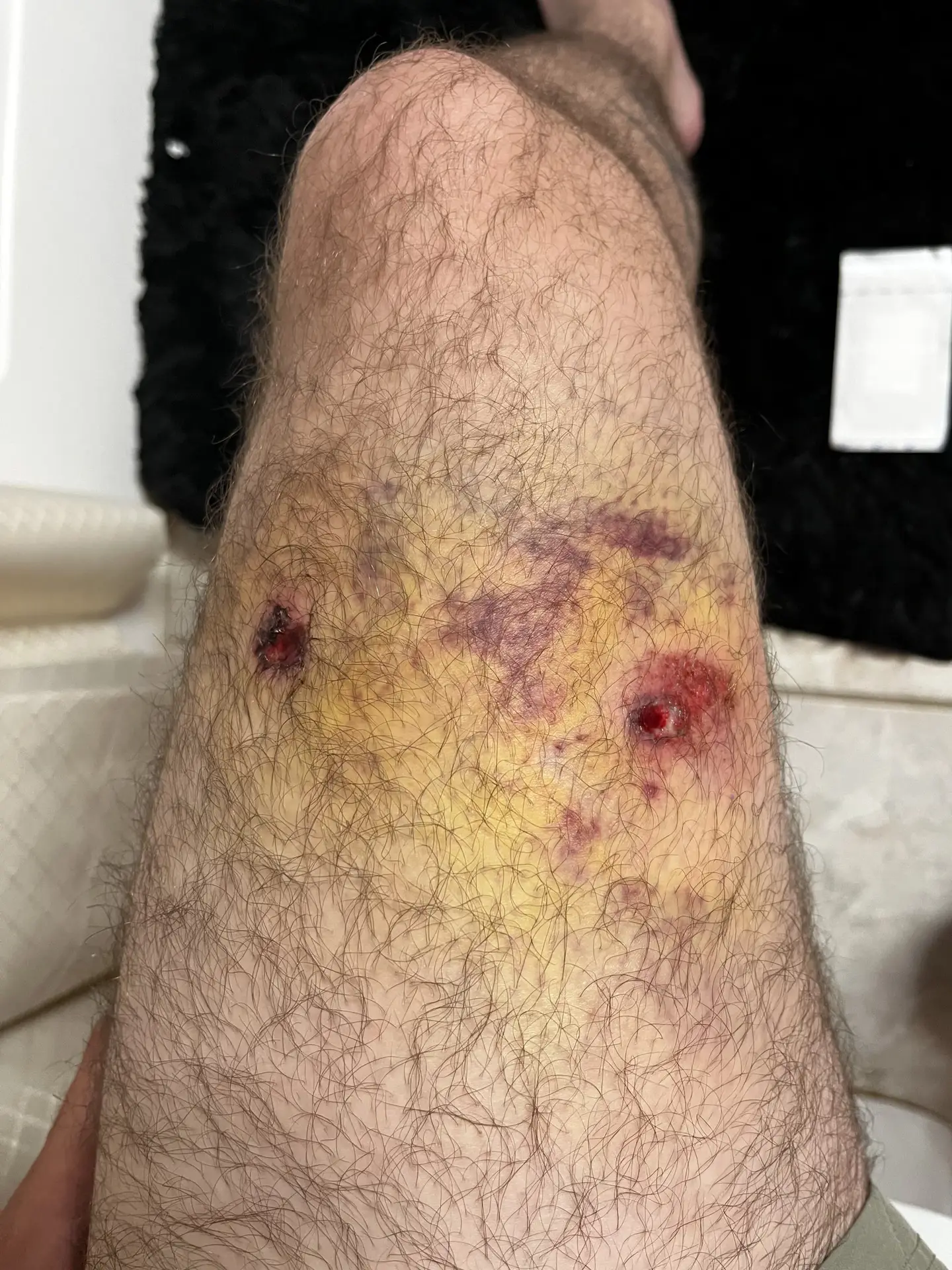
The bullet went into his thigh and came out the other side.
The Next Two Minutes
It was bleeding badly. Because of how he was sitting, he could only see the exit wound at first, so he had no way of knowing whether the round had hit his femoral artery. He knew that if it had, he had roughly two minutes to get it stopped.
He didn’t have a tourniquet within reach. He did have his belt.
He wears a ratcheting belt, and he’s always worn one for exactly this reason. Years ago he took EMT classes (he thought for a while he wanted to be a paramedic), and an instructor told the class about using one as an improvised tourniquet. So he cinched it down above the wound and called 911. He told me he moved “as calm but as fast as I could,” because he didn’t want to miss a step or risk not getting help on the way.

The belt slowed the bleeding enough to hold until police arrived. One of the responding officers had a purpose-built tourniquet (what the now injured guy said looked like a CAT), but while the officer was struggling with it in gloves, our guy took it out of his hands and applied it himself. From there it was an ambulance ride of about ten minutes to the hospital.
Once the wound was evaluated, the news was good. In his words, it was a clean through-and-through and mostly superficial. “No arteries or bones,” he said. “So luck was on my side.”
Here’s the part that stings. He normally carries a trauma bag stocked for four to six people. That day, it wasn’t with him.
What It Cost Him
The leg is healing. The rest of it stuck around a little longer.
He was cited for discharging a firearm. In place of a fine, he was ordered by the court to complete a gun safety course. The pistol was kept by authorities and, as he understands it, will be destroyed.
He doesn’t have a problem with the class. “It’s good to refresh and reflect on the basics,” he said.
So ultimately he is out a gun, I would imagine some medical expenses, some embarrassment among his friends, and a big piece of humble pie.
Why This Happens to Experienced Shooters
Here’s what most people get wrong about negligent discharges. They assume it’s a new shooter problem. Somebody who just bought their first gun or a gangster criminal who doesn’t know how it works, and fumbles it.
New shooters do have NDs. But new shooters are also nervous. They move slowly, they check things twice, and they’re a little scared of the gun. That fear does a lot of safety work for them.
Experienced shooters lose that fear, and that’s mostly a good thing. The problem is that the routine stops being a series of decisions and turns into a series of motions. Drop the mag, rack the slide, glance at the chamber, done. Your hands have done it a thousand times, so your brain stops supervising.
He put it in two words: complacent and distracted. That combination doesn’t care how many rounds you shot last year.
In the training world we call this a negligent discharge rather than an accidental one, because the gun did exactly what it was designed to do when the trigger was pressed. That’s not about piling on. He’d be the first to tell you he got complacent. It’s about being clear that the fix lives with the person, not the pistol.
The Chain of Errors
Almost every negligent discharge is a chain, not a single mistake. Break any one link and nobody gets hurt. In this case there were three.
The chamber was assumed, not verified
He dropped the mag and thought the chamber was clear. “Thought” is the word that matters. At some point the verification step got shortened to a glance, or skipped entirely, and nothing in his routine caught it.
The trigger press is part of the takedown
In the process of removing the slide he pressed the trigger which is necessary on a Glock. The trigger must be depressed before you can disassemble the gun. In that moment, the trigger press wasn’t a decision to fire a gun. It was just one more step in getting the slide off, folded into the act of working the pistol apart.
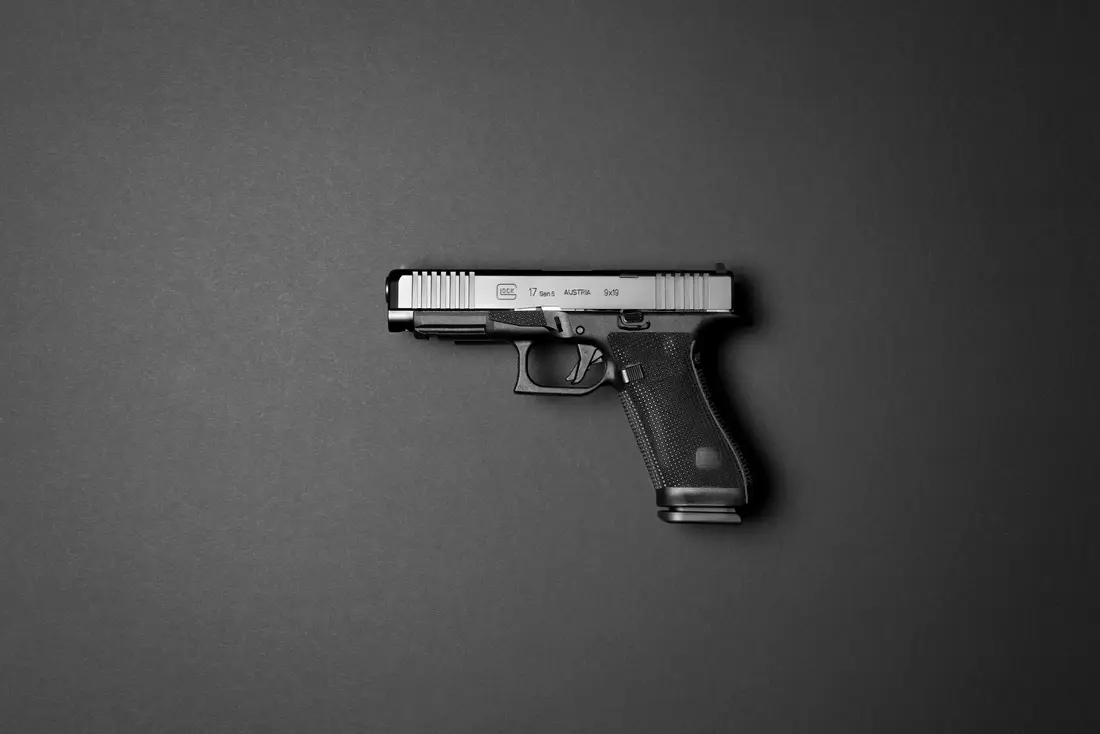
I know you Glock fans, and I myself carried a Glock for over a decade of my concealed carry life, won’t want to hear it but this is a real life example of that thing that people tell you that you have decided isn’t really a thing. This wasn’t the first time and it won’t be the last time that it leads to injury.
Now obviously Glocks have been disassembled billions of times without firing off a round. If proper procedures are followed it is rightfully so a non-issue. However, it is a function of that platform that can contribute to a procedural safety mistake in a bad way.
The muzzle was pointed at his own leg
I asked him, as gently as I could, why the gun was pointed at his leg. His answer was honest: he doesn’t really know. He was sitting down, and he thinks he had the gun turned in his hands to get a grip on the slide.
That’s worth thinking about, because I think it’s incredibly common. I say that because on the range most of the muzzle issues we witness come when someone is performing a firearm manipulation like clearing a malfunction, performing a reload, or trying to lock a stubborn slide to the rear. It rings true that in the moment of disassembly someone might not be as cognizant of the muzzle direction of the gun. Picture your own process and ask yourself how you hold that gun when you take it apart. Nobody decides to point a gun at their own leg. It just ends up there.
Those three links line up neatly with the four universal firearm safety rules. Treat every gun as if it’s loaded. Never point the muzzle at anything you aren’t willing to destroy. Keep your finger off the trigger until you’ve made the decision to fire. Know your target and what’s beyond it. Any one of those, followed in that moment, ends this story differently though as acknowledged, that trigger has to be depressed in order to disassemble the gun.
Some Other Takeaways From This Story
To keep this from getting too long let me point out a few other key lessons.
- Medical Gear On You. I don’t always have my ankle trauma kit on me but I’m rethinking that decision. In this case there wasn’t an arterial bleed but our guy applied an improvised TQ anyway because he rightfully so couldn’t see the extent of the injury in the moment. Had it been a real arterial bleed, we don’t know if that belt would have done the job or not.
- Distraction Is The Enemy. We’ve done a lot of research into negligent discharges. One of the biggest patterns is distraction. NDs, especially for experienced gun people, tend to be connected to a distraction. If your attention is broken, stop what you are doing. Reset. Recheck.
- Stick to Routine. This guy wasn’t at his home. He was traveling and at someone else’s home. Avoid gun handling when you are away from your environment that you trust and plays into your habits and routine. If it can’t be avoided, exercise even more caution.
- Look and feel. When you clear a chamber you must visually inspect the chamber and the magazine well, then physically put a finger in both. Eyes get fooled by bad lighting and habit. Fingers are harder to fool. If that isn’t part of your routine or habit you need to change your routine and habit.
- It Can Happen To You. I would rather not learn humility the hard way. Lose your ego and accept you are vulnerable. Only caution and care prevent accidents.
- A Safer Direction. You must handle guns in your home. It is inevitable. You most likely don’t have a SAFE direction in your home. So you have to identify or create the safest direction you can and keep the muzzle pointed that way while you perform whatever administrative task needed. And, as you might have guessed this is where I also shamelessly plug BarrelBlok which should be inserted into your gun as a precursor to any sort of administrative handling. Remove it from the barrel after the barrel has been removed from the gun if needed and then stick it back in the barrel before the barrel goes back into the gun.

The Same Discipline Applies to Dry Fire
Everything above applies with even more force to dry fire practice. Dry fire is one of the best things you can do for your skills, and it means deliberately pressing the trigger on your carry gun, in your house, over and over. That’s exactly why the protocol has to be airtight. Ammo out of the room, gun verified empty, a safe backstop, and a fresh start any time you get interrupted.
The people who get hurt in dry fire are rarely beginners on day one. It’s usually someone on day forty who has stopped checking.
What He Wants You to Take Away
I asked him what he’d want other gun owners to hear from all this. Here’s what he said.
He’s very active in the firearms community. He trains, he shoots a lot, and he knows what he’s doing. And something he calls “as stupid as this” still happened to him, because he got complacent. His message: no matter how comfortable or how active you are with firearms, don’t forget the basics, and don’t forget safety.
I’d add just a few things.
- Your experience is an asset everywhere except in the parts of gun handling you’ve stopped paying attention to.
- Clear every gun like it’s the first gun you’ve ever cleared.
- A trigger press is always a decision. Never let it become a motion.
- Know where your muzzle is, especially when you’re sitting down.
- Keep a tourniquet on you or within arm’s reach whenever you handle guns, and practice applying it to yourself.
He got lucky. Most of us would rather not need luck.
If you want to hear more of my ramblings about Negligent Discharges check out what I think is a very important read: 6 Required Behaviors To Stop Negligent Discharges – Follow These Like It’s Religion
